Do I Need My Passport When Going From Nice To Monaco?
No routine border check separates Nice from Monaco, but carrying a passport or national ID still matters for the casino, hotels, and emergencies. Here is what to bring and why.
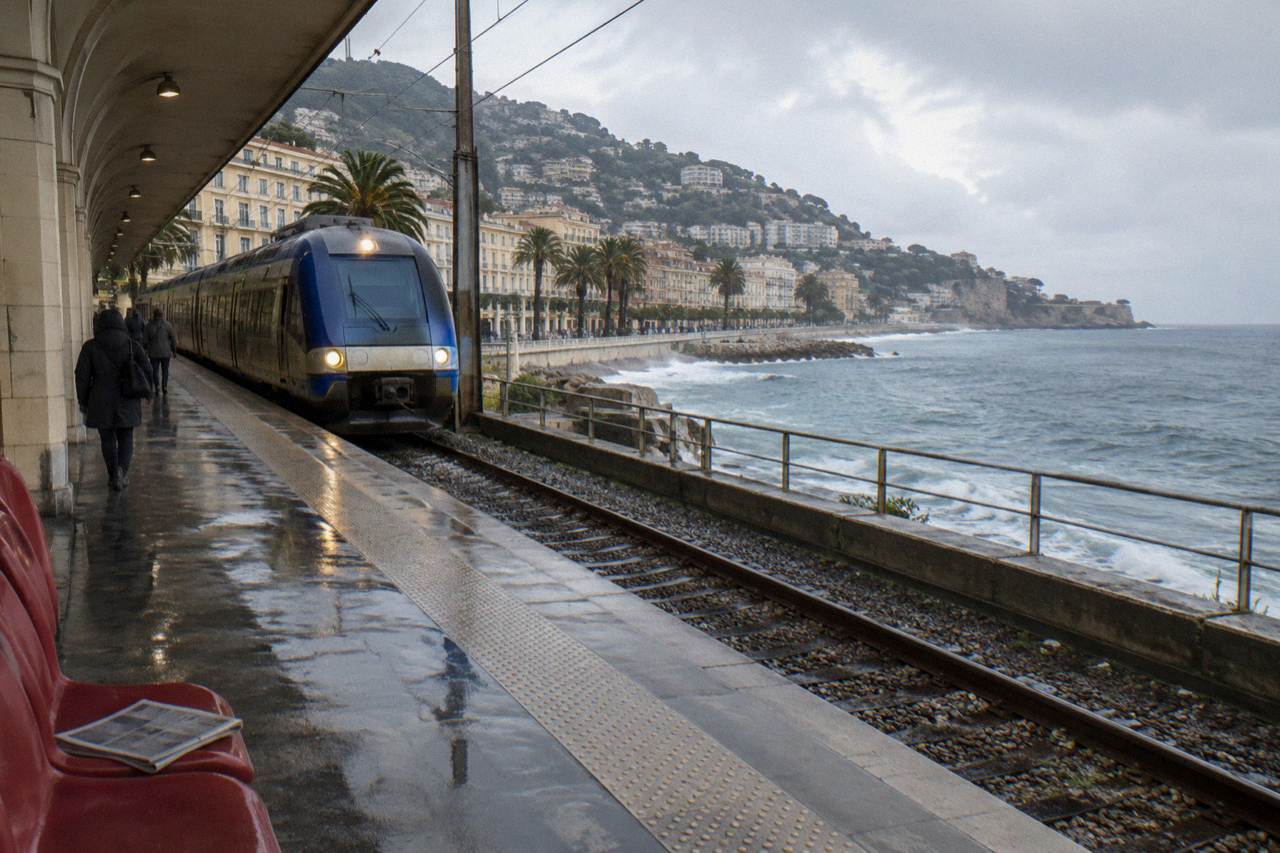
No, you will not normally show a passport travelling from Nice to Monaco. The border between France and Monaco is open, with no routine ID check on the TER train, the 600 bus, or the coastal road, and the trip takes about 20 minutes by rail at 6.10 EUR single. Carry a passport or national ID anyway, because the casino in Monte-Carlo does require valid identification to enter.
That is the short answer, and it is the one repeated by the Monaco Day Trips planning pages for good reason: the question comes up constantly because Monaco looks like a separate country on the map and behaves like one in some ways. It mints its own stamps, fields its own police, and sets its own casino rules, yet physically you can cross from France without ever slowing down. There is no checkpoint building at the Monaco train station, no barrier on the Moyenne Corniche, and no conductor asking for documents once the train leaves Nice Ville.
The nuance is worth understanding before you travel. The absence of a border check is a fact of daily life on this route, but it is not a legal exemption from carrying ID. French law expects adults to be able to prove identity on request, and there is no border check on the train between Nice and Monaco. Controls are not routine, but carrying a passport or national ID card remains the sensible choice for any adult crossing into the principality. A driver's licence from outside the EU does not satisfy the requirement; a passport or national ID card does.
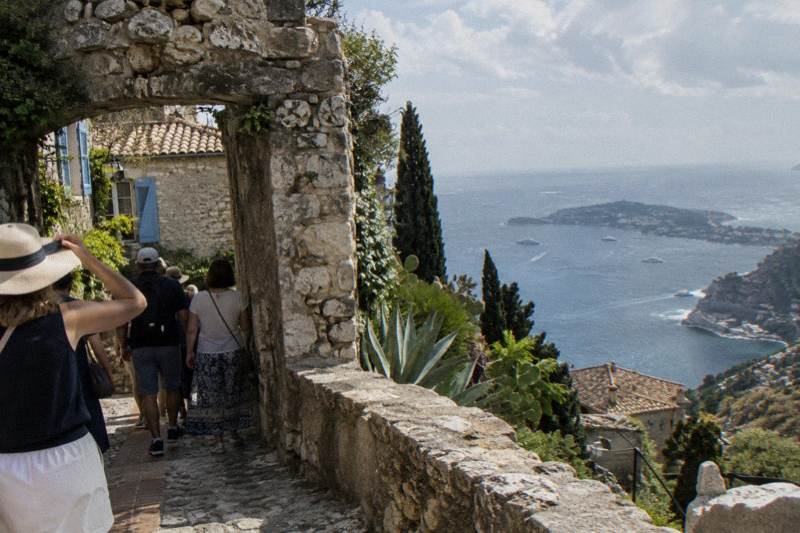
The cheapest organized way to make the crossing is a shared half-day departure from Nice that strings together Eze, Monaco, and Monte-Carlo, listed from $40.16 per person. For readers asking the passport question at the moment of booking, that listing, Eze, Monaco and Monte-Carlo half-day from Nice, is the natural starting point, and the fuller Nice to Monaco transport guide covers every other way of making the trip.
What Documents Should You Actually Carry Across?
Carry your passport, or a national ID card if you are an EU or EEA national. Those are the two documents Monaco accepts at the casino, at hotels doing registration, and in any police interaction. Non-EU visitors should keep their passport on them at all times, because it is the only document that proves lawful presence, and a photocopy or digital image is explicitly not accepted at the Casino de Monte-Carlo.
The distinction that trips people up is between documents that get you across the border and documents that work inside Monaco. Almost anything gets you across, in practice, because nobody asks. Inside the principality the rules sharpen. The casino's gaming rooms admit only visitors aged 18 and one day or older, with a valid national ID card for EU nationals or a passport with a photograph, and the operator's own entry conditions page lists driving licences, photocopies, and digital IDs as unacceptable. That single rule is the most common reason a day tripper ends up standing outside one of the most famous buildings in Europe.
Hotels add a second reason. You can expect to show a passport at check-in, so keep it within easy reach., so even a one-night stay means handing over a passport or ID card at check-in. If your day trip turns into an unplanned overnight, which happens more often than visitors expect during the summer festival run from early July to mid-August, you will want the real document in your bag rather than locked in a Nice hotel safe.
One practical note on storage: the coastal trains between Nice and Monaco can get crowded, so keep bags zipped and valuables out of easy reach, so a zipped inner pocket or a money belt beats a back pocket or an open tote. Losing a passport a thousand kilometres from home converts a minor inconvenience into a consulate visit, and the nearest US consulate is in Marseille, not Nice.
Why Is There No Border Check Between France And Monaco?
Monaco is not formally part of the Schengen Area, but it sits inside the Schengen zone's practical perimeter through its customs union and open land border with France. There are no routine passport or customs controls on the train, the bus, or the road, and this arrangement has held for decades, written into the Franco-Monegasque treaty framework rather than into EU membership.
The phrasing matters and most quick answers online get it backwards. Monaco is not an EU member and not a formal Schengen member, so writing "Monaco is in Schengen" is wrong, even though the experience of crossing looks identical to crossing from France to Belgium. The principality operates in a grey zone: France, under treaty, handles Monaco's border with non-Schengen countries, and Monaco in turn applies entry rules equivalent to the French ones. The practical result for a traveller arriving from Nice is simple, no border check on the train or the road.
For non-EU visitors, this means the visa situation follows whatever allowed you to enter France. An American who entered France under the visa waiver arrangement, to use the formal term for US entry, can continue to Monaco on that same basis; the principality adds no separate visa of its own for short visits. The Monegasque embassy guidance states it plainly: EEA nationals need a passport or ID card, everyone else needs a passport, and any visa requirement follows standard French and Schengen rules.
It is worth reading the underlying transport facts on the official TER page for the Nice to Monaco route, which makes no mention of document controls because there are none to mention. The same openness applies on the road, where the border between Beausoleil and Monaco is marked by little more than a sign and a change in street lighting.
When Does A Passport Stop Being Optional In Monaco?
The passport becomes mandatory in three situations: entering the Casino de Monte-Carlo gaming rooms from 14:00, checking into any accommodation, and any formal police or medical interaction. The casino rule is the one that catches day trippers, with a 20 EUR entry fee from 14:00 including a 10 EUR voucher, and strict 18-plus ID checks at the door.
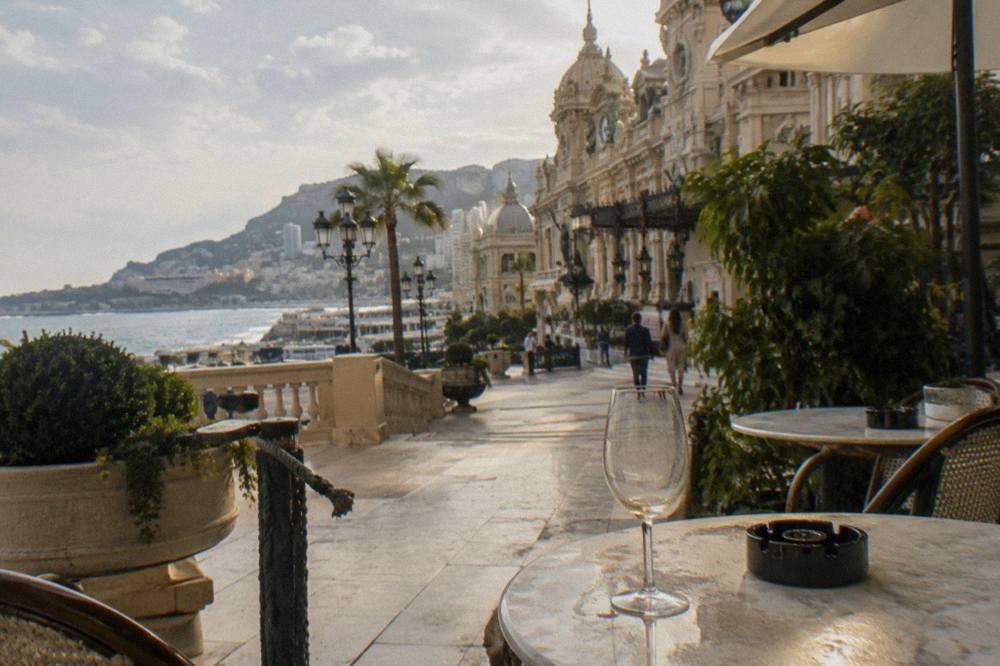
The casino deserves its own paragraph because it is the single most common passport-related disappointment on a Monaco day trip. Morning heritage visits of the Atrium run from 10:00 to 13:00, last entry 12:15, at 20 EUR for adults with no age limit, and these are more relaxed on dress. From 14:00 the gaming rooms open and the rules harden: 18 and one day minimum, passport or EU national ID only, and a dress code that bans shorts, ripped jeans, sportswear, and trainers, with T-shirts ruled out after 19:00. The details live on the operator's official entry conditions page, and it is worth reading before you go rather than after you have been turned away.
Beyond the casino, identification matters for anything official. Travel insurance claims, a lost-card cancellation at a bank, a pharmacy selling prescription medication, or a visit to the hospital all move faster with a passport in hand. None of these are likely on a six-hour visit, but the cost of carrying the document is a few grams of weight, and the cost of not having it can be the difference between a solved problem and a stranded afternoon.
How Does The Border Work On Each Route From Nice?
On every route the answer is the same: no document check in normal conditions. The TER train covers the distance in about 20 minutes for 6.10 EUR single, the 600 bus takes about an hour for 2.10 EUR contactless or 2.50 EUR cash, and a helicopter transfer takes about 7 minutes from roughly 195 EUR per seat. None of the three involves a passport control point.
The table below sets out the practical differences between the routes, with journey times and fares side by side. It answers the underlying question, whether any of them adds a document step, and none does.
| Route | Time | Cost | Border Check |
|---|---|---|---|
| TER train, Nice Ville to Monaco-Monte-Carlo | about 20 minutes | 6.10 EUR single, 4.30 EUR with ZOU! card | none in normal conditions |
| Bus line 600, coastal road | about 1 hour | 2.10 EUR contactless, 2.50 EUR cash | none |
| Helicopter, Nice airport to Monaco heliport | about 7 minutes | from about 195 EUR per seat | none on the flight itself, standard airport security at departure |
| Organized tour coach from Nice | half-day or full-day | from $40.16 per person shared, private tours priced per group | none |
Two caveats belong here rather than scattered later. First, helicopter passengers pass through normal airport-style screening at the Nice heliport, which involves showing the booking and a piece of ID to the operator, though it is an aviation formality rather than an immigration check. Second, the train line has scheduled engineering works: trains between Nice, Monaco, and Menton are fully suspended all day on 10 November 2026 and until about 17:30 on 11 November 2026, with limited replacement buses, so anyone travelling on those two days should build extra time and not read the disruption as a new border rule. The Lignes d'Azur network pages and the TER info-trafic alerts carry the live picture.
Do Cruise Passengers Need Passports For A Monaco Day Visit?
Cruise passengers can go ashore in Monaco or Villefranche-sur-Mer without a Monaco-specific document, because both ports are tender ports and the shore side is the same open border. Ships anchor offshore, tenders run to the quay in about 10 to 15 minutes, and from Villefranche the train to Monaco takes 11 to 16 minutes with no check.
Villefranche-sur-Mer works as the classic example. The tender ride lands you at the old port quay, the station is a short uphill walk, and the coastal TER carries you to Monaco in well under twenty minutes. Cruise lines tell passengers to carry their ship's card and a photo ID ashore, and that advice covers the shore side too, since a passport left in the ship's safe does not help at the casino door if the afternoon plan includes the gaming rooms. The dedicated Villefranche cruise port to Monaco guide covers the tender logistics and the train timing in full.
Monaco's own port operates the same way. Ships anchor in the bay and tender passengers to Quai Antoine 1er, with smaller vessels occasionally docking alongside. There is no immigration step at the quay, just the usual gangway security. Shore excursion groups walk off together and board their coach or boat without any document handover beyond the tour voucher.
What Does An Organized Tour Change About Documents?
Nothing at the border, and a great deal at the casino and the attractions: a tour crosses the same open frontier, but guides routinely remind guests about ID and dress rules, and the shared departures from Nice are the cheapest structured way to do the trip, from $40.16 per person for a half-day covering Eze, Monaco, and Monte-Carlo.
The half-day shared trip from Nice is the entry point for most first-time visitors, and its price, from $40.16 per person, undercuts the cost of doing the three stops alone once you add trains, buses, and the Eze connections. The listing describes hotel-relevant logistics, free time in Monaco, and a stop in the medieval village of Eze; check the live listing for the exact pickup points and the inclusions, since those details belong to the operator rather than to any summary.
Travellers who want more depth have two main upgrades. The full-day Monaco, Monte-Carlo and Eze tour stretches the same triangle across a full day, giving the Casino square, the Rock of Monaco, and the hilltop village unhurried time, with the price shown on the listing rather than quoted here. The full-day Eze and Monaco tour guide walks through what the longer format adds hour by hour.
The small-group half-day alternative keeps the group small and the tone closer to a private tour, pairing Monte-Carlo with Eze village in a format that suits travellers who dislike 50-seat coaches. Whichever departure you choose, the document advice stays constant: bring the passport, wear long trousers if the casino is on the afternoon plan, and treat the guide's reminders as the operative rule rather than internet folklore.
What Should A Day Tripper's Document Checklist Look Like?
Pack a passport or EU national ID card, a photo of the ID page stored on your phone as a backup, travel insurance details, and the booking confirmation for any tour. Skip the photocopy for the casino, where only the original document works, and skip anything that promises a border stamp, because there is no border post between Nice and Monaco to issue one.
The checklist is short because the requirements are short. Here is the practical version: the entry rules, the casino conditions, and the transport facts for the Nice to Monaco run.
| Situation | Document needed | Notes |
|---|---|---|
| Train, bus, or road from Nice | none checked routinely | carry passport or ID anyway |
| Casino morning Atrium visit, 10:00 to 13:00 | no ID needed, 20 EUR | relaxed dress, no age limit |
| Casino gaming rooms from 14:00 | passport or EU national ID, 18 and one day plus | no photocopies or digital IDs |
| Hotel check-in | passport or national ID | required for guest registration |
| Organized tour boarding | booking confirmation, photo ID | operator-dependent, check the listing |
| Police or medical interaction | passport | standard practice across the region |
One recurring myth deserves a line of its own. Some visitors hope for a Monaco passport stamp as a souvenir, and informal stamp services have appeared and disappeared around the Rock over the years, but there is no official immigration post and no official stamp, because there is no official border procedure. A stamp obtained anywhere is a novelty, not a record, and it has no standing if a border officer elsewhere later questions it.
The last word on timing: the passport question peaks in booking season, which for this route means spring. The sweet spot for calm streets is May or October, with daytime highs around 20 to 21 degrees and only about seven busy days a month, while July runs packed on most days and the Grand Prix window of 4 to 6 June 2027 brings closures of the Palace, the Exotic Garden, and several roads. Whichever month you choose, the document answer does not change.
Common Questions About Crossing From Nice To Monaco
Do I Need My Passport When Going From Nice To Monaco?
No routine check exists on the train, the bus, or the road, so you will not normally show a passport. Carry one anyway for the casino, hotels, and emergencies, and note that non-EU visitors should keep their passport on them at all times as proof of lawful presence.
Nice Vs Monaco
Nice is a full French city with beaches, markets, and a large old town, while Monaco is a 2.08 square kilometre principality built around the Rock, the port, and Monte-Carlo. The two are about 20 minutes apart by train at 6.10 EUR single, so the real question is not either or but how much time each deserves.
Which Is Nicer, Monaco Or Nice?
It depends on what you want. Monaco delivers density: palace square, cathedral, casino, and port within walking distance of one station. Nice delivers breadth: a genuine urban rhythm, cheaper food, and the Cours Saleya market. Many travellers find one full day in Monaco enough and give Nice two or three.
Which Is Nicer, Nice Or Monaco?
Asked the other way round, the same trade-off applies. Budget travellers lean Nice, where an inexpensive lunch averages around 18 EUR versus Monaco's steeper menus, while anyone drawn to the casino, the Grand Prix circuit, and the yacht-filled port will find Monaco the sharper experience. The half-day shared tour from Nice, from $40.16 per person, covers Eze, Monaco and Monte-Carlo in a single outing.
Can I Enter The Monte-Carlo Casino With A Driver's Licence?
No. The gaming rooms from 14:00 accept only a passport or an EU national ID card, and the operator's conditions explicitly exclude driving licences, photocopies, and digital IDs. Morning Atrium visits between 10:00 and 13:00 do not carry the same ID requirement.
Do Children Need ID To Travel From Nice To Monaco?
No border document is checked for children on the train, bus, or road. Family tickets for attractions work on age, not documents: under 6 enters the Prince's Palace free during its open season, 4 to 17 pays the child rate at the Oceanographic Museum, and the casino's 18-plus rule means children cannot enter the gaming rooms at all.