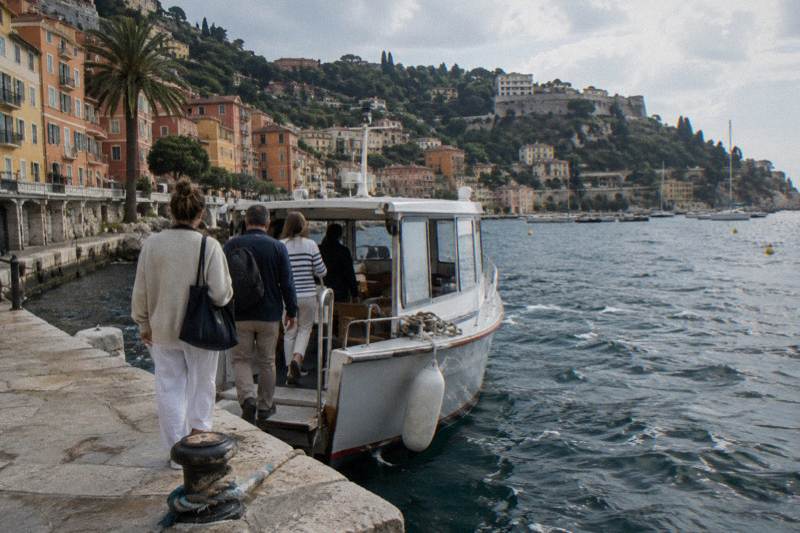
Villefranche Sur Mer: Harbour Town Near Monaco
Villefranche-sur-Mer sits on one of the deepest natural harbours on the French Riviera, fifteen minutes from Monaco by train and a tender ride from the cruise ships that anchor in the bay.
Short answer
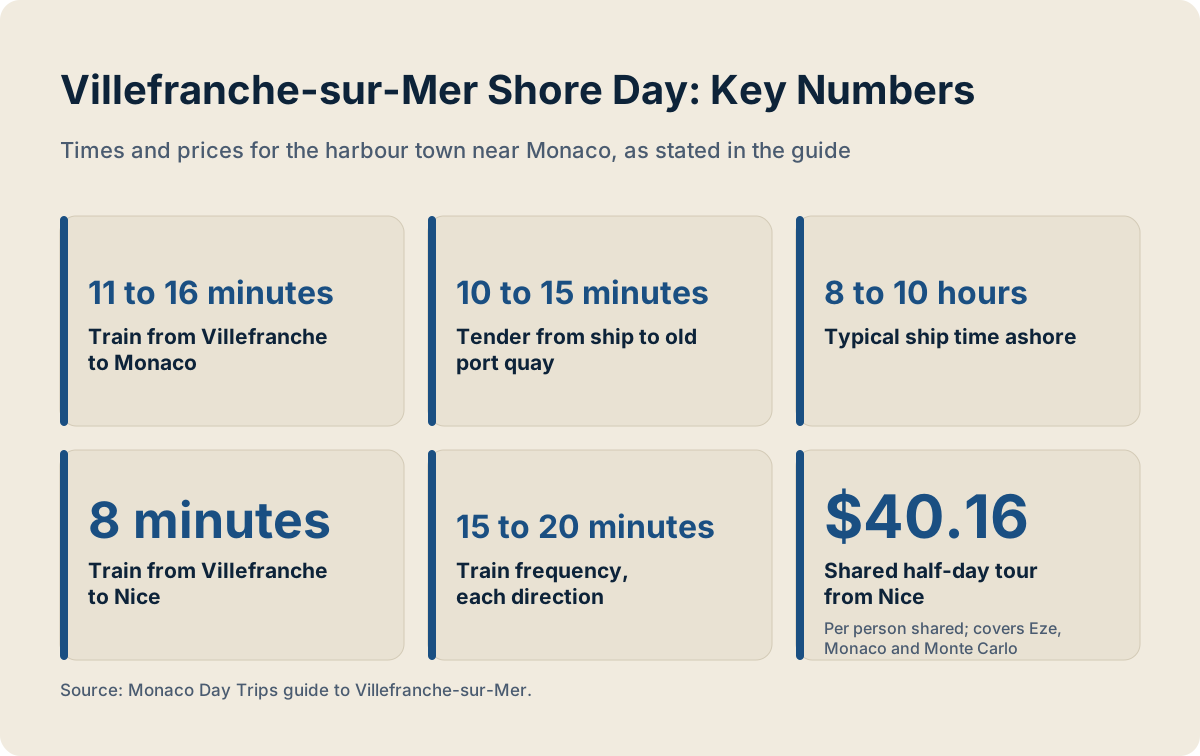
Villefranche-sur-Mer is a small harbour town between Nice and Monaco, reached from Nice in about 8 minutes by train and from Monaco in 11 to 16 minutes. Cruise ships anchor in its bay and tender passengers ashore. A small-group Monaco, Monte Carlo and Eze tour from the harbour runs from $170.40 per person, in groups of up to 8, and the shared half-day from Nice starts from $40.16 per person.
What Is Villefranche-Sur-Mer And Why Do Visitors Stop Here?
Villefranche-sur-Mer is a small harbour town on the Cap Ferrat side of the Bay of Villefranche, minutes from Nice by train and 11 to 16 minutes from Monaco. Cruise ships anchor in the bay because the water is deep enough for large vessels, and passengers tender ashore to the old port quay in about 10 to 15 minutes. The town sits directly on the coastal rail line every Monaco trip already uses.
The bay is the reason the town matters in its modern form. Rade de Villefranche is one of the deepest natural anchorages on the Mediterranean coast, which is why navies used it for centuries and why cruise lines still favor it over docking in Nice, where the port cannot take the largest ships. On a typical call day, passengers come ashore at the old port, walk five minutes uphill to the train station, and ride direct to Monaco. That single fact shapes everything about visiting the town: it is a launchpad as much as a destination.
For travelers building a Monaco itinerary, Villefranche matters for two reasons. First, it is the closest tender port to Monaco, closer than Nice and much closer than Cannes, so shore excursion timing is more forgiving. Second, the town itself deserves half a day: the old town of tall ochre and terracotta facades, Rue Obscure, a covered medieval street, and the waterfront along the plage des Marinières give it a character that Monte Carlo deliberately lacks. The guide to getting from the cruise port to Monaco covers the mechanics in detail if you are arriving by ship.
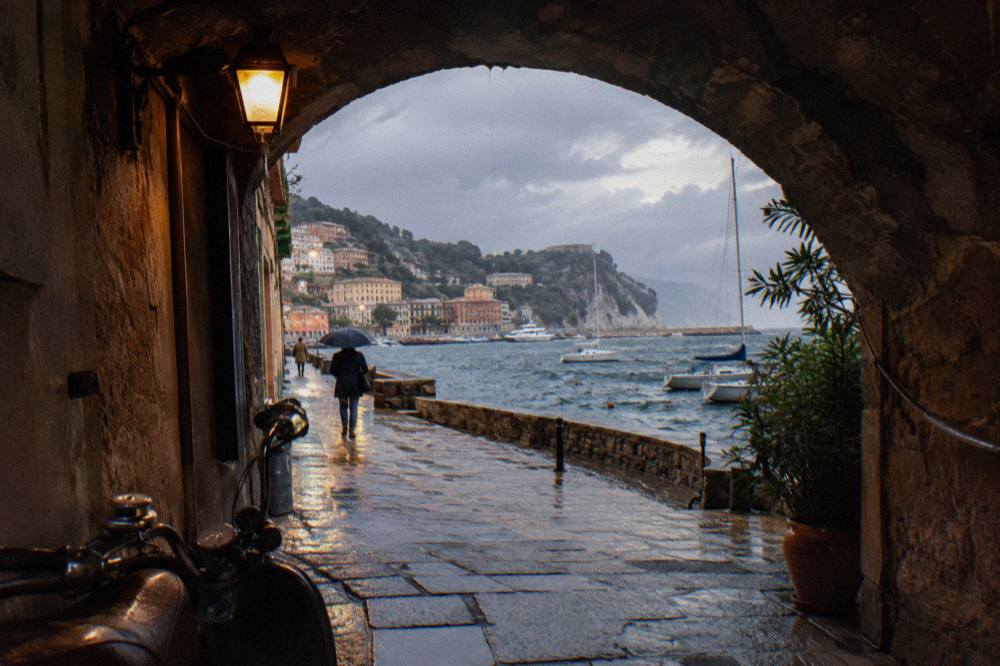
The comparison that comes up constantly is Villefranche versus Nice as a base. Nice is bigger, louder and better connected; Villefranche is quieter, smaller, and puts you on the water. A reader planning around Monaco can treat the two as interchangeable for rail purposes, since both are stops on the same TER line, but the day-to-day experience is completely different. Nice gives you a city; Villefranche gives you a harbour village with a deep-water view.
How Do You Get From Villefranche-Sur-Mer To Monaco?
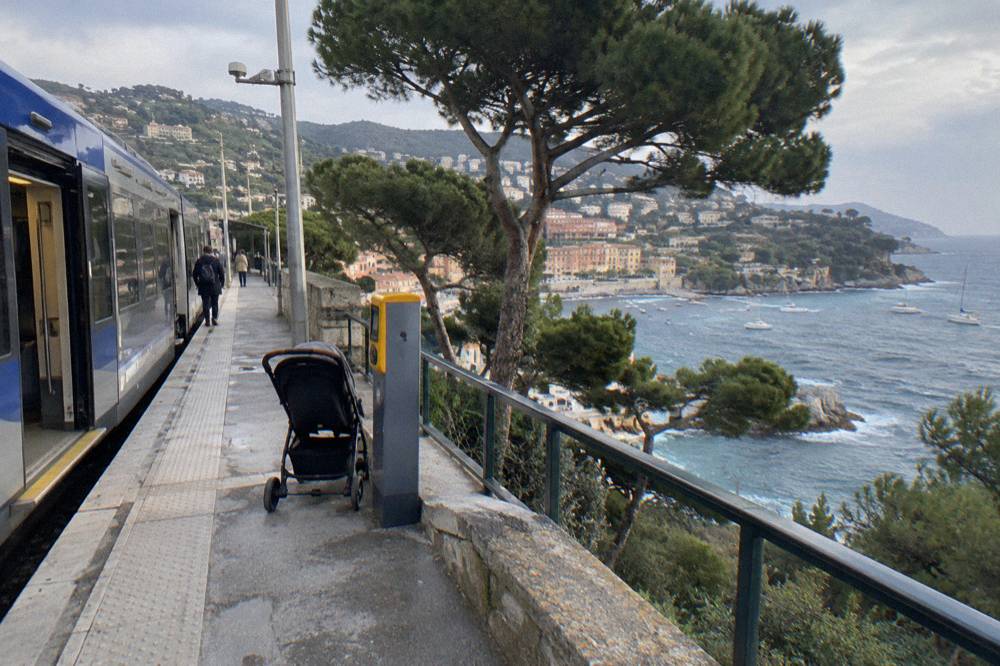
The direct TER train from Villefranche-sur-Mer to Monaco takes 11 to 16 minutes, with frequent daily service on the Marseille to Ventimiglia coastal line. A single costs a few euros at the machine or on the regional rail app. The only walking involved is the five-minute uphill stroll from the tender quay to the station. There is no border check on the train, and no passport control at Monaco.
The train is the answer for almost everyone. The station is small and unstaffed, so tickets come from machines or an app; the ride hugs the coast through Beaulieu-sur-Mer and Cap d'Ail before dipping into the tunnel under Monaco. Trains run roughly every 15 to 20 minutes in each direction through the day, which means a missed train costs you a coffee, not an excursion. The regional operator's Nice to Monaco route page is the live source for fares and works the same way for the Villefranche leg.
One dated disruption matters if you are traveling in early November: trains on the Nice, Monaco, Menton section are fully suspended all day on 10 November 2026 and until about 17:30 on 11 November 2026 for major infrastructure works, with limited substitute buses. On those two days, a bus or a pre-booked tour vehicle is the safer plan. Outside that window, the line is the backbone of Riviera travel.
| Option | Villefranche to Monaco | Notes |
|---|---|---|
| TER train | 11 to 16 minutes | Direct coastal line, no border check, tickets from machines |
| Cruise line excursion coach | Varies by operator | Departs from the tender quay area |
| Guided small-group tour | Half or full day | Covers Monaco plus Monte Carlo and Eze |
| Taxi or rideshare | Roughly 20 to 30 minutes road time | Price varies; agree or check the app first |
| On foot | Not practical | The corniche road is long and exposed |
For cruise passengers, the tender itself is part of the journey. Ships anchor in the bay and run boats to the old port quay in the village; the crossing is short, roughly 10 to 15 minutes, but queuing on a full call day can add time. Once ashore, everything relevant is within a ten minute walk: the station uphill, the old town behind the waterfront, and the beach in front of it.
What Can You Do On A Shore Excursion From Villefranche?
A shore day from Villefranche splits cleanly into three options: train independently to Monaco in under 20 minutes, book a small-group tour from the harbour that stacks Monaco, Monte Carlo and Eze into one day, or stay in town and walk the old streets and beach. Ship time ashore usually runs 8 to 10 hours, which is enough for Monaco and one hill village if transport is pre-arranged.
The guided route is what most cruise passengers choose, because it removes the two risks of a port day: timing and tender delays. The small-group Monaco, Monte Carlo and Eze tour from Villefranche harbour is built for exactly this passenger, departing from the harbour area and covering the principality plus the medieval village above it. The price is on the operator's live listing; inclusions and duration are listed there too, so check them against your ship's all-aboard time before booking.
Independent travelers should anchor the day in Monaco itself. The classic sequence is the Rock of Monaco first, the palace square and the changing of the guard at 11:55, then down to the cathedral and the Oceanographic Museum, and finally Monte Carlo around the casino square in the afternoon. Two caveats from the official sources: the Prince's Palace State Apartments are closed for the season and reopen in spring 2027 with no announced date, per the palace's own site, and the casino's gaming rooms require photo ID and smart attire, with full conditions on the operator's entry conditions page.
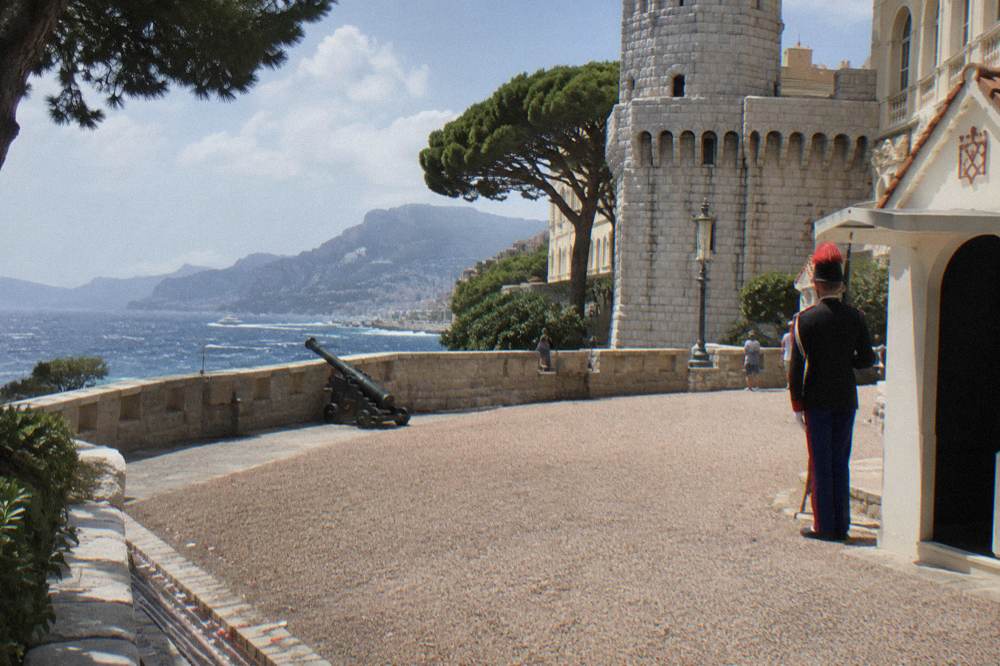
Between Monaco and Villefranche sits Eze, and many tours pair the two deliberately. The hilltop village perches on a cliff high above the water, with an exotic garden at its summit and perfume workshops below in the village streets. If you are doing it independently, the coastal train stops at Eze-sur-Mer at the bottom of the hill; reaching the village means a steep path or a bus connection up. A guided tour takes the road up directly, which is why the pairing is so common on shore excursion itineraries.
The half-day trip from Nice that covers Eze, Monaco and Monte Carlo also works as a mental model for what a shore day can hold: it starts from $40.16 per person shared, which tells you the territory is compact enough to see the three headline stops in a morning. That same geography is what makes Villefranche such a forgiving port. The dedicated Eze and Monaco tour page breaks down that pairing stop by stop.
Is Villefranche-Sur-Mer A Good Base For A Trip To Monaco?
Yes, if you want calm water, a walkable old town and fast rail access, Villefranche is a strong base: 11 to 16 minutes to Monaco by train, 8 minutes to Nice, and direct trains toward Menton and Italy. It is weaker for nightlife, big-city dining and late-evening frequency, where Nice wins clearly. Accommodation is smaller in scale and books out fast in summer.
The base question is really a rhythm question. Villefranche quiets down in the evening; Nice does not. If your Monaco plan involves a night tour, a casino evening or a late dinner, staying in Nice puts you closer to the return options, and the night-tour options from Nice are built around exactly that. If your plan is daytime Monaco plus slow mornings by the bay, Villefranche is the better trade. The guide on where to stay for Monaco day trips works through the same choice across the whole coast.
Rail frequency is the practical limit to understand. Trains are frequent through the day, but service thins in the late evening, and on the two November engineering days mentioned above it disappears entirely. A base in Villefranche with a Monaco night plan needs a checked return time, not an assumption. Everything else about the base is straightforward: one station, one bay, one road in from the corniche.
Sea-based sightseeing is the other base advantage. A sea excursion along the coast gives you Monaco's skyline from the water, which is the only angle that shows how the city climbs out of its own harbour. These depart from Nice and neighboring marinas rather than Villefranche's working quay, so a base here still means a short hop to the departure point.
What Does The Town Itself Offer?
Villefranche-sur-Mer offers an old town of medieval lanes, a covered street called Rue Obscure, a long sandy beach on the bay, the Chapelle Saint-Pierre decorated by artist Jean Cocteau, and a waterfront of cafes along the Marinières beach. Everything is within a ten to fifteen minute walk of the tender quay. Half a day covers it comfortably at walking pace.
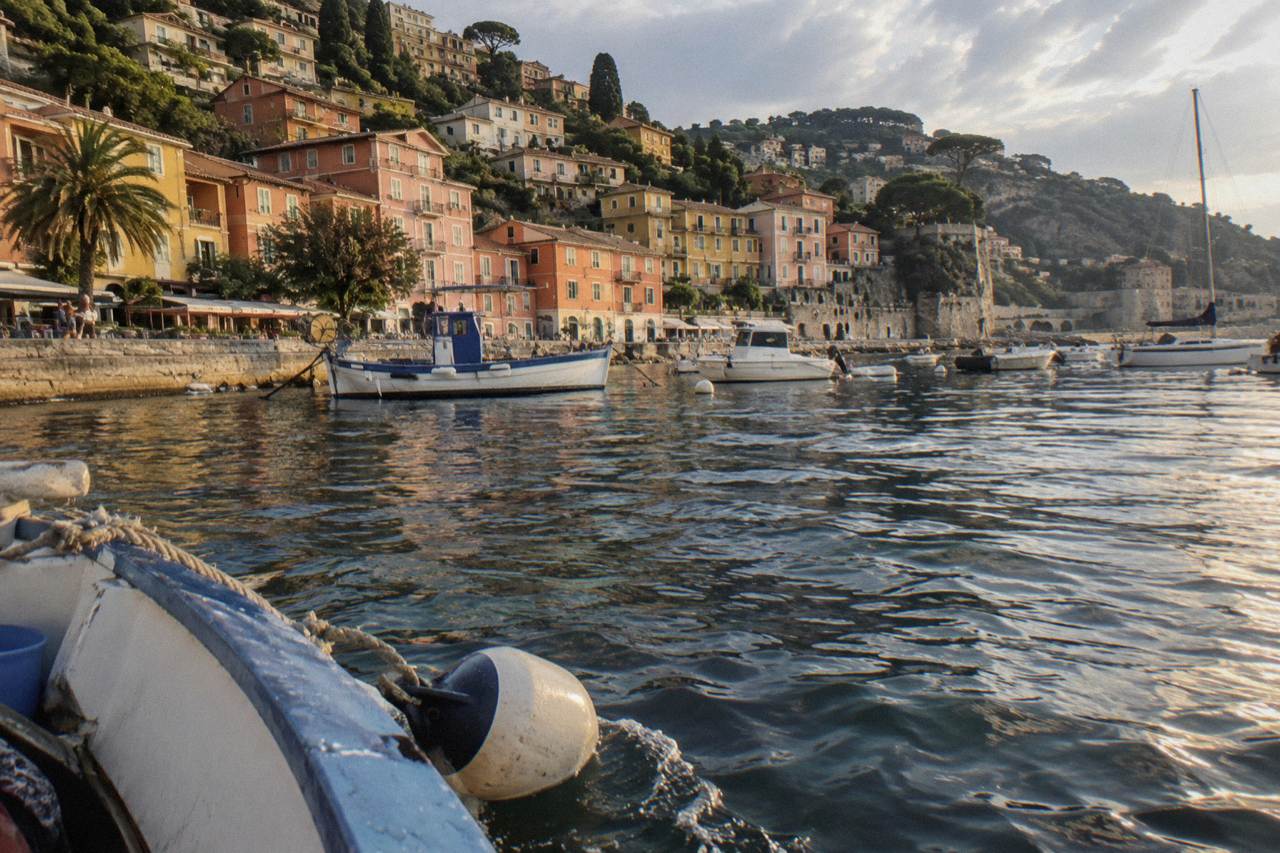
The old town is the reason the town photographs so well. Tall facades in faded ochre, pink and cream rise directly from the waterfront streets, and the grid behind them dates back centuries, to the era when the Counts of Provence ran a free port here. Rue Obscure, a vaulted covered street, runs along the base of the old walls and is genuinely unusual: a medieval passage that still functions as a pedestrian route. The Chapelle Saint-Pierre on the water's edge carries Cocteau's murals, and it is the town's single most visited interior.
| Sight in Villefranche | What it is | Time needed |
|---|---|---|
| Old town and Rue Obscure | Medieval streets and covered lane | 45 to 90 minutes |
| Chapelle Saint-Pierre | Cocteau-mural chapel on the waterfront | 20 to 30 minutes |
| Plage des Marinières | Sandy beach along the bay | Half a day if swimming |
| Citadelle Saint-Elme | Historic fortress, gardens and museums | 1 to 2 hours |
| Harbour quays | Working port, tenders, cafes | 30 minutes |
The Citadel Saint-Elme deserves its own line. The fortress at the harbor's edge now holds gardens, an art collection and performance spaces in season. It closes some days outside summer, so check locally on the day. The beach below the quays, plage des Marinières, is one of the few proper sandy beaches between Nice and Menton, which matters on a hot afternoon between trains.
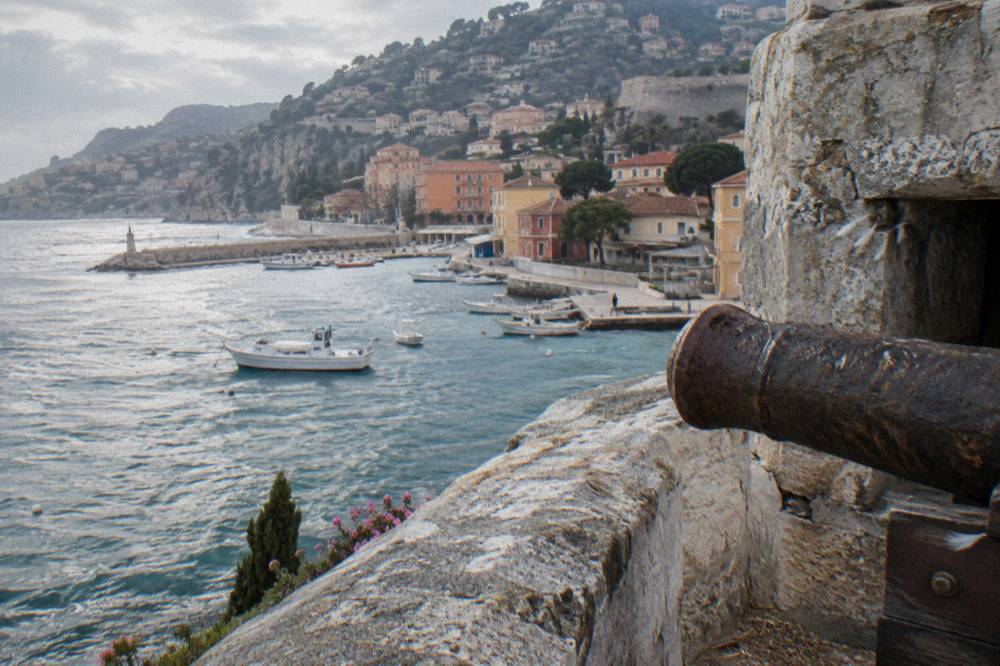
Food and coffee run to simple Riviera prices rather than Monaco ones. Coffee sits around 4 to 5 EUR in most of the waterfront cafes, and a modest lunch averages around 18 EUR, with business-lunch menus near 26 EUR in the middle of town. Prices like these sit close to Monaco levels, so budget accordingly on a Villefranche stop, and it is why many shore-day passengers eat in Villefranche before or after the Monaco leg.
How Does Villefranche Compare With Nice And Menton?
Villefranche is the middle stop of the three: quieter than Nice, livelier than Menton, and a short train ride from Monaco. Nice offers the most trains, hotels and nightlife, Menton offers gardens and a border-town calm at the Italian end of the line, and Villefranche offers the bay, the beach and the cruise anchorage. All three share the same rail line, so the choice is about atmosphere, not access. If the quieter end of the line appeals, our guide to Menton, the lemon town beside Monaco covers the old town, the gardens, and how to pair it with Monaco on an easy day trip.
Menton is 10 to 11 minutes further along the line from Monaco, fares from about 4 to 5 EUR, and the two towns bracket the principality from opposite sides. A day that starts in Villefranche can genuinely include both Monaco and Menton by train, and the Menton lemon town guide covers what that town adds: gardens, lemons, and an old town that feels Italian. The mistake to avoid is trying to add Nice's attractions too; the coast looks small on a map, but each town rewards slowing down.
| Town | Rail time to Monaco | Character | Best for |
|---|---|---|---|
| Villefranche-sur-Mer | 11 to 16 minutes | Harbour village, beach, cruise bay | Calm base, shore days |
| Nice | About 20 minutes | City, transport hub, nightlife | Connections, evenings, choice |
| Menton | 10 to 11 minutes | Gardens, Italian-border calm | A second easy day trip |
| Cannes | About 1 hour | Croisette, conferences | Longer day, from about 10 to 13 EUR |
Cannes appears in the table for completeness, because a lot of Riviera itineraries start there. It is roughly an hour to Monaco by train, fares from about 10 to 13 EUR, which makes it a possible day-trip origin but a poor base if Monaco is your focus. The Cannes to Monaco day trip guide covers that route in full. The honest summary: if Monaco is the center of your trip, stay on the 20-minute corridor between Villefranche and Menton.
Which Tours From Villefranche Are Worth Booking?
The tour that matches the port is the small-group Monaco, Monte Carlo and Eze tour departing from Villefranche harbour, built for cruise and base travelers in one vehicle. Alternatives from the corridor include the sea excursion along the coast from Nice and the shared half-day Eze, Monaco and Monte Carlo trip from $40.16 per person. Private driver tours from Nice cover the same ground at a per-group price for up to 6 or 8 travelers.
Matching a tour to your situation matters more than matching it to a headline. Cruise passengers with one day should take the harbour departure, because the tender-to-departure walk is short and the tour is timed to the port. Travelers based in town for several days can spread the territory across separate days: one for Monaco by train, one for Eze, one on the water. The private driver option from Nice, priced per group rather than per person, suits families or groups of five to eight who want the itinerary to follow them rather than the reverse.
Whichever vehicle you choose, the same three variables decide value: where it departs from, what it includes, and whether entry fees are inside the price. Each tour listing spells out its inclusions and exclusions, so check anything unclear on the live booking page before booking rather than assuming it. The Monaco Day Trips approach is the same on every page of this subject: read the operator's own listing before paying, because conditions on the coast change with the season.
When Is The Best Time To Visit Villefranche-Sur-Mer?
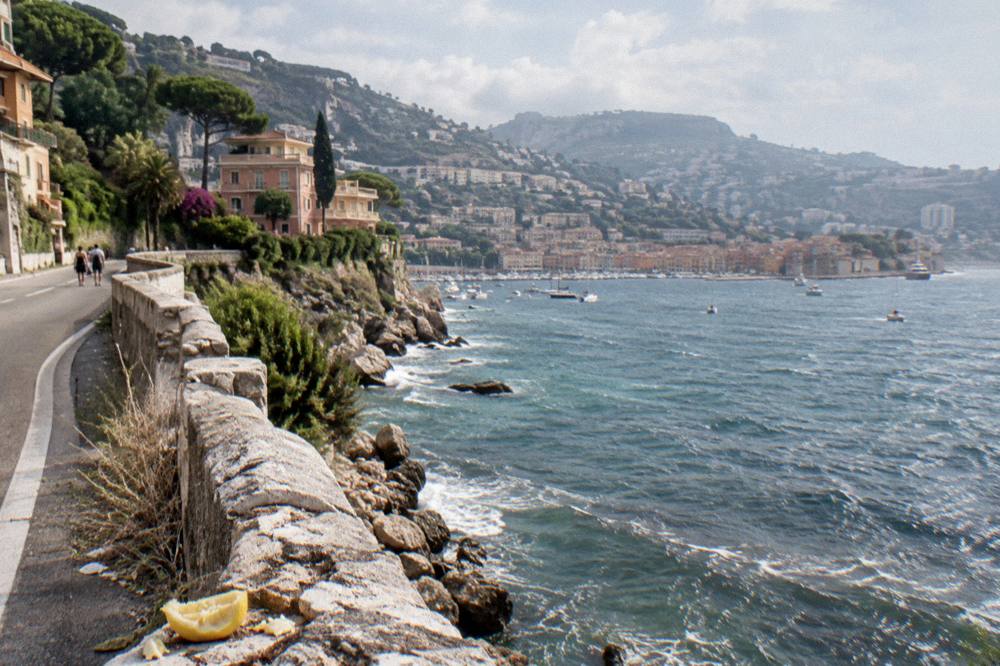
May and October are the best months for combining Villefranche with a Monaco day: daytime highs around 20 to 21 degrees, only about seven busy days each month in the local crowd model, and sea temperatures warm enough in October to still swim. July and August bring highs near 27 degrees, packed crowds every day, and the tender queues at their longest. Winter is calm and mild, with January highs near 13 degrees.
The crowd data is unusually clean for a town this size, because Villefranche's visitors track two calendars: the cruise calendar and the Riviera summer. Cruise ships call here in every month except December and January, with the busiest stretch falling in September and October. That means autumn is both the pleasant season and a busy tender season, and a beach morning can share a day with three ships' worth of passengers. The crowds are manageable because the town disperses people along a long waterfront, but the tender queue timing shifts with arrival schedules.
Summer has a second consideration: heat. The region's records now include a 35.7 degree all-time high set in August 2025 during a heatwave, and June 2025 was the hottest June ever recorded in the area. The bay makes Villefranche more comfortable than inland stops, but midday sightseeing in Monaco in July means stone streets, stairs and very little shade on the Rock. If summer is fixed for you, do the principality early, swim in Villefranche late.
What Should You Budget For A Villefranche-Based Monaco Day?
A full independent day costs a handful of euros for the round-trip train, free for the cathedral and palace square, about 20.50 EUR for the Oceanographic Museum adult ticket during its renovation discount, and roughly 18 EUR for a simple lunch in Villefranche versus more in Monaco. A guided day runs from $40.16 per person on the shared half-day, with the harbour small-group tour priced on its live listing.
The honest framing is that transport is trivial and admission choices drive the total. Monaco's headline free sights, the cathedral, the palace square, the guard change at 11:55, the port and gardens, cost nothing. Paid interiors stack up: the Oceanographic Museum is 20.50 EUR for adults and 13 EUR for children 4 to 17 while the aquarium zone is renovated, the Exotic Garden is 12 EUR for the garden alone, and the casino's morning heritage visit is 20 EUR. A couple mixing two paid interiors with lunch can spend a modest day's budget without trying.
| Item | Cost | Basis |
|---|---|---|
| Villefranche to Monaco train | A few EUR single | TER coastal line, machine tickets |
| Cathedral, palace square, guard change | Free | Public spaces |
| Oceanographic Museum | 20.50 EUR adult, 13 EUR child 4 to 17 | Renovation-discounted rates |
| Exotic Garden, Monaco | 12 EUR garden only | 15 EUR with cave or botanical centre |
| Casino morning visit | 20 EUR adult | Gaming rooms from 14:00, 18 plus with ID |
| Lunch in Villefranche | About 18 EUR average | Simple cafe, higher on the waterfront |
| Shared half-day tour from Nice | From $40.16 per person | Shared departure |
The budget floor and the guided floor tell the same story from both ends. A disciplined independent day on trains and free sights costs less than a dinner in Monte Carlo, while the cheapest guided day from the corridor starts from $40.16 per person. Between those floors, spend where the day actually needs it: a tour when tender timing is tight, interiors when the weather turns, and lunch in Villefranche rather than beside the casino square.
Common Questions About Villefranche-Sur-Mer
How Far Is Villefranche-Sur-Mer From Monaco?
The direct TER train takes 11 to 16 minutes along the coastal line, with frequent daily service. Cruise passengers should add the five minute uphill walk from the tender quay to the station, plus tender crossing time of about 10 to 15 minutes.
Can I Visit Monaco On A Cruise Stop At Villefranche-Sur-Mer?
Yes, and it is one of the closest tender ports to the principality. You can take the train independently or join the small-group Monaco, Monte Carlo and Eze tour that departs from the harbour area. Either way, set your return against the ship's all-aboard time, not the sailing time.
Is Villefranche-Sur-Mer Worth Visiting For Itself?
Yes. The old town, Rue Obscure, the Cocteau chapel and the sandy plage des Marinières justify half a day on their own, and the Citadelle Saint-Elme adds a fortress with gardens and museums. Many Monaco day-trippers end up wishing they had allowed more time here.
Do I Need A Passport To Travel From Villefranche To Monaco?
There is no border check on the train or the road between France and Monaco. Standard documentation still applies for your own situation, and the casino requires photo ID, a passport or national ID card, for entry to its gaming rooms. Carrying ID is simply sensible on any cross-border day.
What Is The Cheapest Way To Do Monaco From Villefranche?
The train for a few euros each way plus Monaco's free sights, the cathedral, the palace square, the guard change at 11:55 and the port, is the floor. The cheapest guided option in the corridor is the shared half-day Eze, Monaco and Monte Carlo trip from $40.16 per person.
When Do Cruise Ships Visit Villefranche-Sur-Mer?
There are about 81 cruise call days per year across every month except December and January, concentrated in September and October with roughly 12 call days each. Summer calls are fewer per month but bring bigger crowds overall because the whole coast is busy.