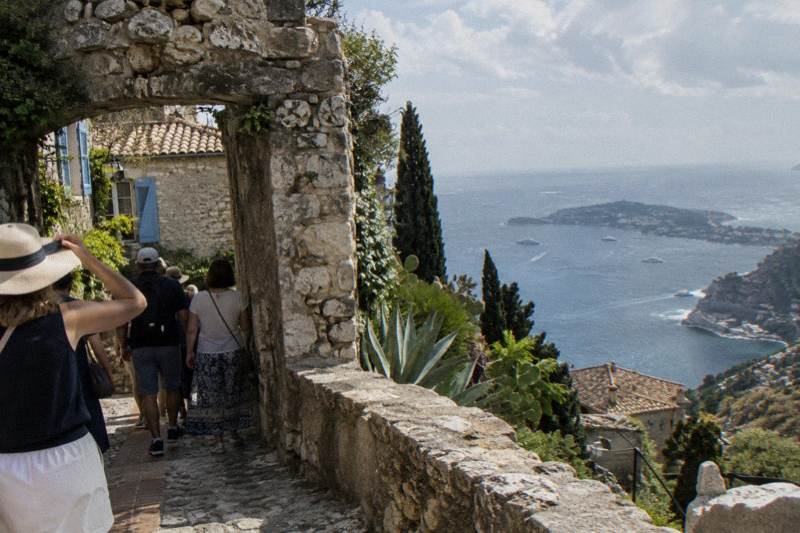
Is Monaco Friendly To Americans?
A practical answer for American visitors: entry rules, getting there from Nice, prices in dollars and euros, language, the casino dress code, and which tours suit a first trip.
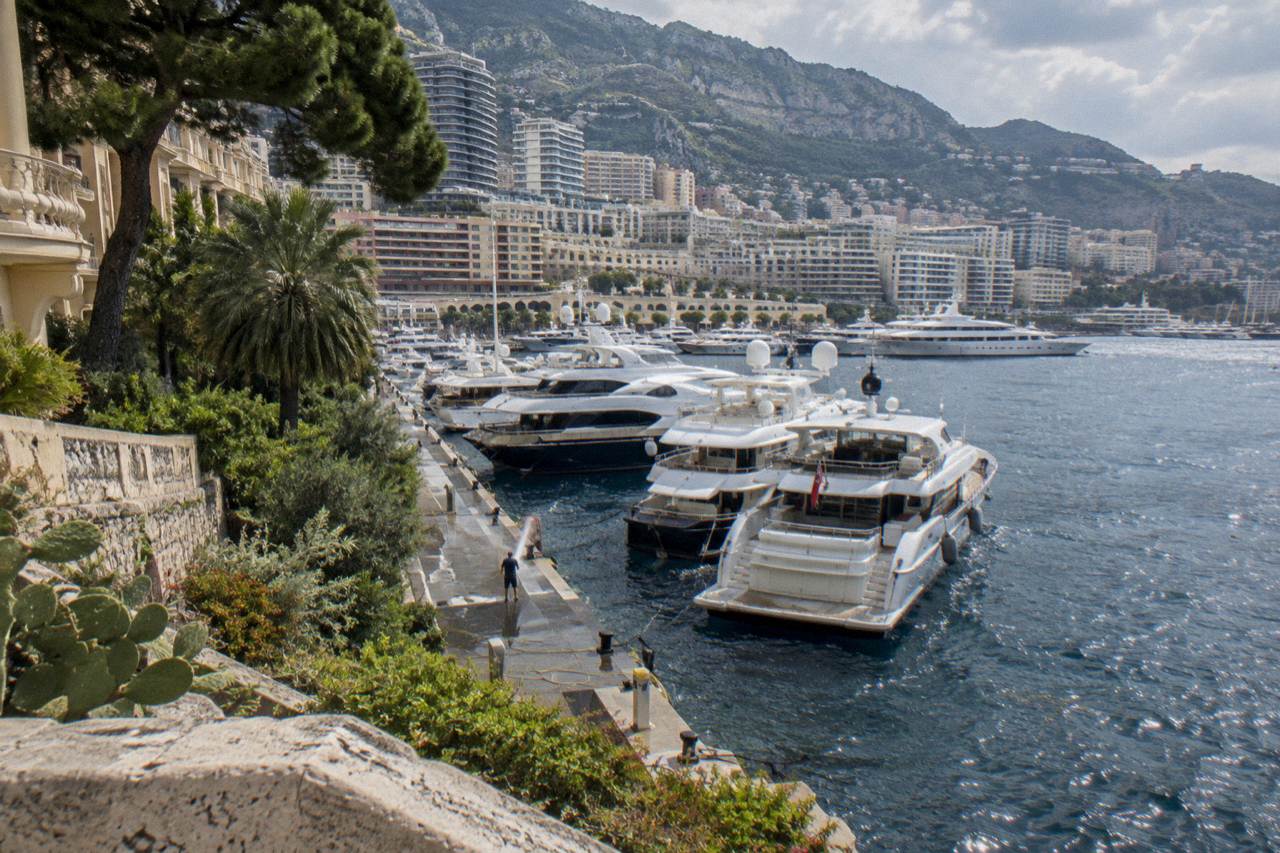
Yes, Monaco is friendly to Americans, and in practice it is one of the easiest micro-destinations in Europe for a US visitor. There is no border check on the train or the road from France, the euro is the currency, English is spoken throughout the tourism economy, and the whole country covers just 2.08 square kilometers, about 208 hectares, with a population of 38,857. Americans arriving from Nice reach Monaco in about 20 minutes by train for a 6.10 EUR single fare. The palace State Apartments are the one major sight currently closed.
Hospitality here is a core industry, not a courtesy. Monaco's economy depends on visitors, and Americans are a familiar segment: cruise passengers at Port Hercule, Grand Prix fans, yacht show guests, and day trippers riding up the coast from Nice. Nobody will treat you as an oddity for being American, and most front-line staff in hotels, restaurants, ticket offices and tour operations switch to English without being asked.
That said, "friendly" and "cheap" are different questions. Monaco is expensive by any standard, a cappuccino runs about 4 to 5 EUR and an inexpensive lunch averages around 18 EUR. The friendliness shows up in how smoothly things work, not in the prices. For a fuller picture of costs, read is Monaco cheap or expensive.
The fastest way to see whether the destination suits you is to let an operator handle the logistics. A shared half-day covering Eze, Monaco and Monte-Carlo runs from $40.16 per person and is described on the Eze and Monaco half-day tour page.
Do Americans Need A Visa Or Passport For Monaco?
Americans need a valid passport but no separate visa for a short visit, because entry runs through France under the same rules that apply elsewhere in Western Europe. Monaco keeps an open border with France, so there is no routine passport or customs control on the train or the coastal road, though you must carry a passport or equivalent ID. Visitors who need a visa for France need one for Monaco too; US passport holders do not. Since most American visitors arrive from the French Riviera anyway, our guide to reaching Monaco from Nice by train, tour or private car compares the realistic timings and costs of each option.
The practical point is simple: carry your passport even though nobody will likely ask for it on the train from Nice. Monaco is not formally part of the Schengen Area, it maintains an open border arrangement with France instead, and random identity checks are legally possible even if they are rare in practice. Police may be more visible on event weekends such as the Grand Prix, when security tightens across the whole principality.
The same document logic applies to the casino, and this is where Americans most often get caught out. The Casino de Monte-Carlo requires valid photo ID for the gaming rooms: a national ID card for EU nationals or a passport. A driving license, a photocopy or a digital image on a phone is not accepted. The minimum age is 18, and the operator applies it strictly. Details are published on the official entry conditions page.
A dedicated rundown of the document question, including the nuances for non-EU nationals, is on the Monaco passport and entry guide.
How Do Americans Usually Get To Monaco?
Most Americans arrive in Monaco the way most Europeans do: by flying into Nice Cote d'Azur airport and continuing east by train, helicopter or road. The TER train from Nice to Monaco takes about 20 minutes and costs 6.10 EUR for a full single fare, with services running frequently along the coast. A shared helicopter transfer from the airport takes about 7 minutes and starts around 195 EUR per person, while a taxi runs roughly 90 to 110 EUR.
The train is the default and it is genuinely easy. Gare de Monaco-Monte-Carlo sits close to the center, ticket machines accept chip cards, and the coastal line also serves Villefranche-sur-Mer in 11 to 16 minutes, Antibes in about 50 minutes from around 7 EUR, Cannes in about an hour from around 10 to 13 EUR, and Menton in 10 to 11 minutes from around 4 to 5 EUR. If you are basing yourself anywhere along the Riviera, Monaco is a short hop, not an expedition.
Two caveats are worth knowing before you plan a rail day. Major engineering works will suspend trains between Nice, Monaco and Menton on Tuesday 10 November 2026 for the full day, and on Wednesday 11 November until about 17:30, with limited substitute buses. Night interruptions will continue at certain periods through December 2026. Check the operator's traffic page for your date. The official TER route page carries the live schedule and fare details.
The bus is the budget alternative. Line 600 runs from Nice through Monaco to Menton about every 10 to 15 minutes on weekdays, every 20 at weekends, takes roughly an hour, and costs 2.10 EUR paid contactless or 2.50 EUR in cash. For cruise passengers, both Villefranche-sur-Mer and Monaco itself are primarily tender ports, so allow time for the boat ride ashore. Once you've arrived, our Oceanographic Museum guide covers tickets, hours, and how to fit the visit into your day.
| Option | Journey time | Typical fare | Notes |
|---|---|---|---|
| TER train, Nice to Monaco | about 20 minutes | 6.10 EUR single | Frequent coastal service; suspended 10 to 11 Nov 2026 |
| Bus line 600, Nice to Monaco | about 1 hour | 2.10 EUR contactless, 2.50 EUR cash | Coastal route, every 10 to 15 minutes weekdays |
| Helicopter, Nice airport | about 7 minutes | from about 195 EUR per person | Shared scheduled seats, daytime frequency varies |
| Taxi or transfer, Nice airport | about 30 to 40 minutes | roughly 90 to 110 EUR | Fixed and zone rates apply; higher at night |
For a fuller comparison, the Nice to Monaco transport guide covers each mode in detail.
Is English Widely Spoken In Monaco?
English is spoken widely enough that an American visitor can complete an entire day in Monaco without a word of French, especially in hotels, casinos, tour operations, ticket desks and restaurants around the port and Monte-Carlo. The official language is French, and many nationalities live in the principality, so staff in visitor-facing roles are used to switching languages constantly. Learning a greeting in French still earns goodwill, but no practical situation requires it.
The tourism economy sets the tone. Ticket staff at the Oceanographic Museum, guides on organized excursions, casino floor personnel and hotel concierges handle English as a working language. Menus typically list prices with numbers that speak for themselves, and the principality's small size means the people serving visitors do so all day, every day.
Off the beaten track, in local bakeries or municipal offices, French is the norm, and a polite "bonjour" before switching to English is the right move. Americans sometimes open with English immediately, which can read as abrupt in France and Monaco alike. The fix costs nothing and changes the temperature of every small interaction.
Guided tours remove the language variable entirely. The operators running shared and small-group excursions from Nice narrate in English as a matter of course, which is one reason first-time American visitors so often choose them over independent train travel.
What Does Monaco Cost For American Visitors?
Monaco is expensive, more than anywhere else on the French Riviera, but core sightseeing costs are fixed and knowable in advance: a cappuccino runs about 4 to 5 EUR, an inexpensive lunch averages around 18 EUR, the Oceanographic Museum costs 20.50 EUR, and the Jardin Exotique costs 12 EUR. Transport is the cheap part, with the train from Nice at 6.10 EUR each way and the local bus at 1.50 EUR a ride.
The psychological adjustment for Americans is the food and drink premium. Monaco's restaurant scene skews upscale, and even casual venues carry port-of-call pricing. The averages from current cost-of-living data put a basic lunch at around 18 EUR, with a range running from 14 to over 50 EUR depending on the venue, and a business lunch around 26 EUR. Coffee at 4 to 5 EUR is the clearest signal of where you are.
Sightseeing, by contrast, is priced like any European city and some of it costs nothing. The cathedral is free, the changing of the guard at the palace at 11:55 daily is free, and the public gardens, the Japanese Garden, the ramparts on the Rock and the Port Hercule quays are all free to enjoy. Paid highlights are itemized below.
| Item | Price | Notes |
|---|---|---|
| Cathedral of Monaco | free | Closed or restricted during services |
| Changing of the guard, palace | free | Daily at 11:55, Place du Palais |
| Prince's Palace State Apartments | 13 EUR adult when open | Currently closed, reopening spring 2027 |
| Oceanographic Museum | 20.50 EUR adult | Reduced rate during aquarium renovation |
| Jardin Exotique de Monaco | 12 EUR garden only | 15 EUR with cave or botanical centre |
| Casino morning heritage visit | 20 EUR adult | Atrium visit, 10:00 to 13:00 |
| Casino gaming rooms from 14:00 | 20 EUR | Includes a 10 EUR voucher, ID required |
Tours compress this math. Shared day trips from Nice that include Monaco start at $40.16 per person for a half-day seat, with small-group and full-day options priced on their live listings; either way, the package covers transport, guiding and routing for less than the sum of the parts booked separately. The cheapest real day trip option starts from $40.16 per person for a shared half-day covering Eze, Monaco and Monte-Carlo, and a full-day version lets you linger rather than rush.
Will The Casino Let Americans In?
Yes, the Casino de Monte-Carlo admits Americans from age 18 with a passport, and there are no nationality restrictions of any kind. Entry to the gaming rooms from 14:00 costs 20 EUR and includes a 10 EUR voucher usable on slots, the bar or the restaurant with conditions. The dress code is the real filter: no shorts, ripped jeans, sportswear, trainers, men's sandals or flip-flops, and no T-shirts after 19:00.
Bring the actual passport. This is the single most common American stumble, because a US driving license is refused at the door and a photograph of the document is refused too. The casino enforces the age rule strictly at 18, and the gaming rooms open at 14:00 and run until about 04:00. The wider set of guides lives on Monaco Day Trips.
Morning heritage visits are a separate, gentler product: from 10:00 to 13:00, with last entry at 12:15, you can see the Atrium and the architecture for 20 EUR, at 15 EUR for ages 13 to 17, free for 6 to 12, with no age limit and a relaxed dress expectation. Many visitors prefer this to the tables. The full rules are on the operator's conditions page.
For what to actually wear beyond the casino doors, the what to wear in Monaco guide covers the unwritten codes around town.
Which Sights Are Closed Or Changed Right Now?
The Prince's Palace State Apartments are closed, the 2026 season ended on 15 October, and the official site says only that they reopen in spring 2027 with no exact date published. The Oceanographic Museum is open but partially under renovation, with its Mediterranean aquarium zone closed and reduced admission of 20.50 EUR reflecting the works. The casino, cathedral, Jardin Exotique and old town are all open as normal.
The palace closure is the one that reshapes an itinerary, because the State Apartments are the headline interior. The exterior, the palace square and the daily 11:55 changing of the guard remain fully accessible, and the guard ceremony is genuinely worth building a morning around. The official palace site will carry the reopening date when it is set.
The Oceanographic Museum discount is a rare piece of good news for budget planners: 20.50 EUR instead of the normal 22.50 EUR for adults, and 13 EUR for children aged 4 to 17, while the renovation continues toward a planned spring 2028 reopening of the affected zone. Everything else in the museum, including the tropical aquarium, stays open.
Plan around the Grand Prix if you are traveling in early June. The 2027 race runs 4 to 6 June, and the palace, the Jardin Exotique and several other sites close entirely for that weekend, while the whole month of June ranks as busy or packed in crowd modeling. Grandstand prices are not published on official pages, so treat any figure a reseller quotes as unverified.
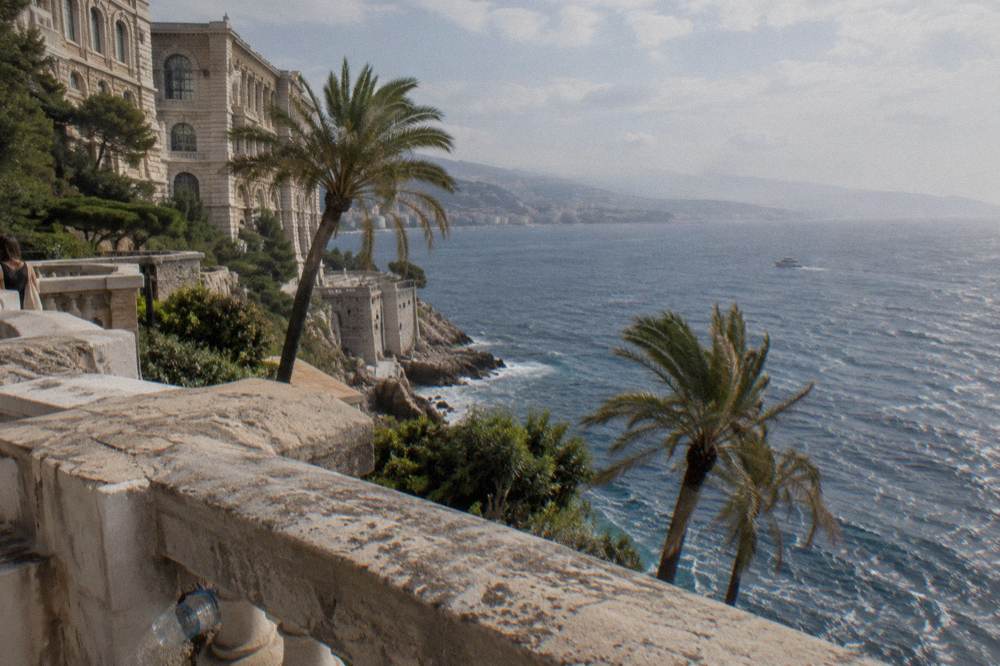
Is Monaco Safe And Comfortable For American Tourists?
Monaco is one of the safest destinations an American tourist can choose, with a heavy, visible police presence, an extremely low crime rate and a compact, walkable layout of about 2 square kilometers. Streets are clean, public transport is cheap at 1.50 EUR a bus ride, and the main discomforts are physical rather than criminal: steep hills, summer heat, and crowds during July and August, when crowd models rate every single day as busy or packed.
Comfort, not safety, is what to plan for. The Rock of Monaco involves real climbs, so wear proper shoes, and the climate data shows July and August highs around 26.6 and 26.9 degrees Celsius with only 1.7 and 2.5 rainy days respectively, heat that concentrates on exposed terraces and staircases. May and October are the sweet spots by most measures, with highs around 20.4 and 20.6 degrees and far fewer packed days.
Americans used to long distances will find the scale disorienting in a pleasant way. You can walk the old town, the port and the casino district in a few hours. The local CAM bus network, at 1.50 EUR contactless per ride or 5.50 EUR for a 24-hour pass, handles the elevation changes, and elevators and escalators connect the different levels of the city, a detail almost no first-time visitor expects.
Tipping follows loose European norms rather than American ones: service is included in restaurant bills by law, and rounding up or leaving a small amount is appreciated but not obligatory. Nobody will chase you for a 20 percent tip.
Should Americans Book A Tour Or Go Independently?
For a first visit, most Americans do well with a tour from Nice, because it compresses Eze, Monaco and Monte-Carlo into one handled day from roughly $40.16 per person at the shared end, with a full-day option and a small-group half-day for more depth or fewer passengers. Independent travel by train is equally viable and cheap at 6.10 EUR each way, but it leaves the routing, the timing and the hill logistics to you. For a closer look at the shorter option, the Monaco half day tour planning guide compares shared, small group and private formats and explains what each one tends to skip.
The honest trade-off is control versus efficiency. Independent travelers get to linger wherever they like, and the train makes that easy. But Eze Village, the medieval hilltown that pairs naturally with Monaco, sits on a bus line with a steep climb from the coast station, and combining it with Monaco independently in one day is where many self-planned itineraries run out of steam by mid-afternoon.
The tour lineup splits into clear tiers. The shared half-day from Nice covering Eze, Monaco and Monte-Carlo is the entry point at from $40.16 per person. A full-day version of the same routing gives you the afternoon in Monte-Carlo rather than a snapshot of it, with price and current rating on the live listing. And a small-group half-day capped at fewer passengers suits travelers who dislike coach-scale groups; its price and availability are also on the operator's listing. Check each listing for the exact inclusions, since entry fees and pickup terms vary by product.
For travelers arriving on a cruise ship, shore excursion versions run from both Villefranche-sur-Mer and Cannes, and the timing is built around the ship's schedule rather than the train's. The Monaco shore excursions guide breaks those down.
What Should Americans Know Before Their First Day?
Bring your passport, budget for high food prices, pack smart-casual clothes if the casino is on the list, and do not plan around the palace interior until it reopens in spring 2027. Use the train from Nice for the cheapest and fastest transfer, carry a card that works contactless, and check whether any engineering works affect your travel date. Everything else, from the guard change to the free cathedral, works exactly as advertised for visitors of any nationality.
Money is the last practical detail. Monaco uses the euro, cards are accepted nearly everywhere, and contactless payment works on trains, buses and museum ticket desks alike. There is no local currency to learn and no unusual payment system, though the casino's gaming floor remains cash-and-card territory with ID at the door.
Time zones and jet lag matter more than visitors expect. Americans arriving from the East Coast face a six-hour shift, and Monaco rewards early risers: the guard change at 11:55, the cathedral's morning quiet and the casino's 10:00 opening all sit on the early side of the day, while the gaming rooms run to about 04:00 for night owls who adjust the other direction.
TThe single best prep move is simply reading the listings before you land. Knowing whether you want the $40.16 shared half-day, the full-day version or a small-group format decides half your itinerary before you ever board a plane, and Monaco Day Trip keeps the comparisons current as listings and prices move.
Common Questions About American Visitors To Monaco
Is Monaco Friendly To Americans?
Yes. Monaco welcomes Americans with no visa requirement for short visits beyond a valid passport, widespread English in tourism businesses, and a safe, compact environment that is easy to navigate on foot. The main adjustment is cost, not culture.
Do Americans Need A Visa To Visit Monaco?
No, US passport holders do not need a separate visa for a short stay. Entry runs through France's open border with Monaco, so there is no routine passport check on the train or road, but you should still carry your passport.
Can Americans Enter The Casino De Monte-Carlo?
Yes, from age 18 with a passport or valid national ID. Entry to the gaming rooms from 14:00 costs 20 EUR including a 10 EUR voucher, and the dress code bars shorts, sportswear, trainers and, after 19:00, T-shirts.
Is English Spoken In Monaco?
Yes, widely. French is the official language, but staff in hotels, casinos, museums, tour operations and restaurants routinely work in English, and an American visitor can manage comfortably without French.
How Expensive Is Monaco For American Tourists?
Very expensive for food and drink, with coffee around 4 to 5 EUR and a basic lunch averaging about 18 EUR, but sightseeing is moderate, with the cathedral and guard change free and major museums around 12 to 21 EUR. The train from Nice costs 6.10 EUR each way.
Is The Prince's Palace Open To Visitors?
The State Apartments are currently closed after the season ended on 15 October 2026. The official site says they reopen in spring 2027 without publishing an exact date. The palace exterior, square and the daily 11:55 guard change remain accessible.