Passport And Entry Requirements For Monaco
Monaco keeps an open border with France, so the train from Nice rolls in with no passport control. What you still need to carry, and when ID really gets checked, is the part worth getting right before you book.
Short answer
No routine border checks apply between France and Monaco, so a day trip from Nice feels like a domestic train ride. EEA nationals can carry a national ID card or passport; everyone else, including US citizens, needs a passport. The casino in Monte-Carlo checks ID at the door and admits only those 18 and older.
The train from Nice reaches Monaco in about 20 minutes and never stops at a border post, because there is no routine border post to stop at. That single fact causes more confusion than any other part of planning a trip to the principality. Travellers arrive expecting a checkpoint and find a station sign instead, while others assume no ID is ever needed and then get turned away at the Casino de Monte-Carlo for carrying only a phone photo of their passport. The honest answer sits between the two: the border is open, but Monaco is a separate state with its own rules, and certain doors, above all the gaming rooms from 14:00, ask for real documents. Once the document question is settled, the full guide to visiting Monaco from Nice for a day walks through trains, buses, costs and how much you can realistically see before heading back.
A document check is usually the last thing on anyone's mind when comparing tours. The shared half-day trip from Nice that pairs Eze village with Monte-Carlo, priced from $40.16 per person, crosses exactly the same open border as the train, and a certified-guide walking tour of Monaco or a hop-on hop-off bus circuit never involves a document at all. Where papers matter is the evening casino visit, the helicopter transfer and any cruise-ship tender process, and those are the cases this guide covers in detail.
Do You Need A Passport To Enter Monaco From Nice?
No passport check takes place on the train, the bus or the road between Nice and Monaco, because the two states maintain an open border with no routine controls. That said, EEA nationals should still carry a national ID card or passport, and all other travellers, including US citizens, should carry a full passport, since spot checks by French or Monégasque police are legally possible even though they are rare in practice. Beyond the border itself, identification can still matter once you arrive, since the Monte Carlo casino and many hotels routinely ask for a passport, and our guide to whether you need a passport from Nice to Monaco explains exactly what to carry and why.
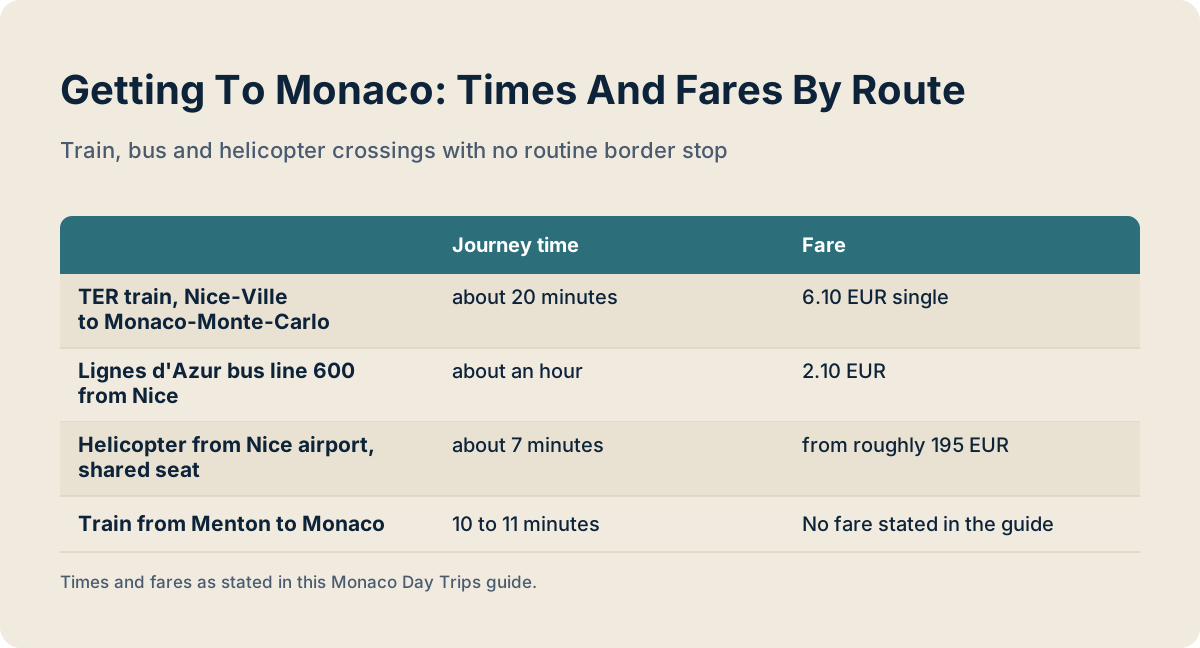
The practical experience of crossing is deliberately unremarkable. TER trains run the coastal line roughly every 15 minutes at peak times, the full single fare is 6.10 EUR, and the journey takes about 20 minutes from Nice-Ville to Monaco-Monte-Carlo. There is no announcement, no barrier and no formality. Lignes d'Azur bus line 600, the successor to the old line 100, does the same run in about an hour for 2.10 EUR contactless or 2.50 EUR in cash. Drivers check tickets, not citizenship.
Legally, though, you have entered a different country. Monaco issues its own stamps, registers its own residents and applies its own entry policy, which mirrors the French one in practice. The Monégasque embassy in France states the rule plainly: visitors from the European Economic Area may enter with a national identity card or passport, while all other nationals need a passport, with any visa requirement following standard Schengen-area rules. So while nobody waves that document at the border, the underlying obligation to hold the right papers does not disappear.
For a fuller walk-through of the documents question in question form, the companion piece Do I Need My Passport Going From Nice To Monaco? covers the same ground from the day-tripper's angle, including what happens if you leave the passport in the hotel safe.
Is Monaco Part Of The Schengen Area?
No, Monaco is not formally a Schengen member, but describing it as "outside Schengen" misleads more than it informs. The principality is formally outside the Schengen Area, but its open border with France means no routine controls and no border check on the train, so travellers moving from Nice or Menton encounter no passport control at all. The distinction matters legally, yet for a day trip it changes nothing about what you carry.
The formal position is that Monaco is a sovereign state with a customs and monetary union with France, and the French authorities administer the external Schengen border on Monaco's behalf. Arriving in Monaco by land from France therefore feels exactly like arriving in any French town. Arriving by sea, on a cruise tender into Port Hercule or across the bay at Villefranche-sur-Mer, follows the ship's own procedures, since both ports operate as tender anchorages rather than full customs docks.
Where the nuance becomes practical is for travellers whose entire stay in the Schengen zone depends on visa rules. Time spent in Monaco counts within the same allowance as time in France, and a traveller who needs a Schengen visa for France needs it for Monaco too. Nobody will usually ask to see it at the border, but the obligation stands, and airlines and cruise lines check visas long before any train does.
The reliable rule of thumb: carry what you would carry for France, and treat Monaco as France for document purposes. For the money side of the same journey, How Much Does A Train From Nice To Monaco Cost? breaks down the fares and the cheaper ZOU! card options.
Between the tour options above there is no document difference at all. The shared half-day from Nice, the certified-guide tour of Monaco itself and the hop-on hop-off bus all operate inside the open border zone, so the choice comes down to pace and format rather than paperwork.
What ID Should Non-EU Travellers Carry For Monaco?
Travellers from outside the European Economic Area, including US, UK, Canadian and Australian citizens, should carry a full passport, valid for the whole trip, whenever they enter Monaco. No visa is required for short visits for those whose passports qualify for French visa-free entry, but the passport itself is non-negotiable, and a driving licence or a photo on a phone satisfies no official in any scenario where ID is actually demanded. For a fuller picture of what to expect on arrival, the US citizen's guide to visiting Monaco covers entry rules, transport from Nice and day trip basics.
American visitors sometimes assume the relaxed border means relaxed documents. The reverse is true. Because there is no checkpoint, the first person to ask for ID may be a hotel receptionist, a casino doorman or a police officer during a routine check on the Rock, and at that point the only accepted document is the passport itself. The UK's departure from the EU moved British visitors into the same category: passport, not national ID, since the UK issues no ID cards.
| Traveller type | Accepted document for Monaco | Notes |
|---|---|---|
| French or other EEA national | National ID card or passport | Either works; ID card is sufficient |
| US citizen | Passport | No visa for short stays; US and UK citizens need only a valid passport; a Schengen visa applies only if their nationality requires one |
| UK citizen | Passport | No visa for short visits |
| Child under 18 | Passport or EEA ID card | See the children's section below for accompanied-travel rules |
| Anyone entering the casino gaming rooms | Passport or national ID card, 18 plus one day | Driving licences, photocopies and digital IDs are explicitly refused |
The 90-day question also comes up. A non-EU passport holder's clock runs across the whole Schengen zone, Monaco included, so a day trip from Nice consumes the same allowance as a day in Paris. For most Riviera visitors this is irrelevant, but long-stay travellers counting days should log Monaco exactly as they log France. The embassy guidance on visiting Monaco states the entry categories in full. For a fuller picture of how the principality treats United States passport holders, the guide to Monaco for American visitors covers entry rules, prices, language, and what to expect on a first visit.
Booking a guided product rarely changes any of this. A shared half-day from Nice picks up passengers without a document check, the hop-on hop-off bus checks a voucher, and a certified-guide walking tour asks only for a name. The one product family where documents do surface is the shore excursion, covered further down, because the cruise line's own manifest rules govern the tender.
Do Cruise Passengers Need Passports For A Monaco Stop?
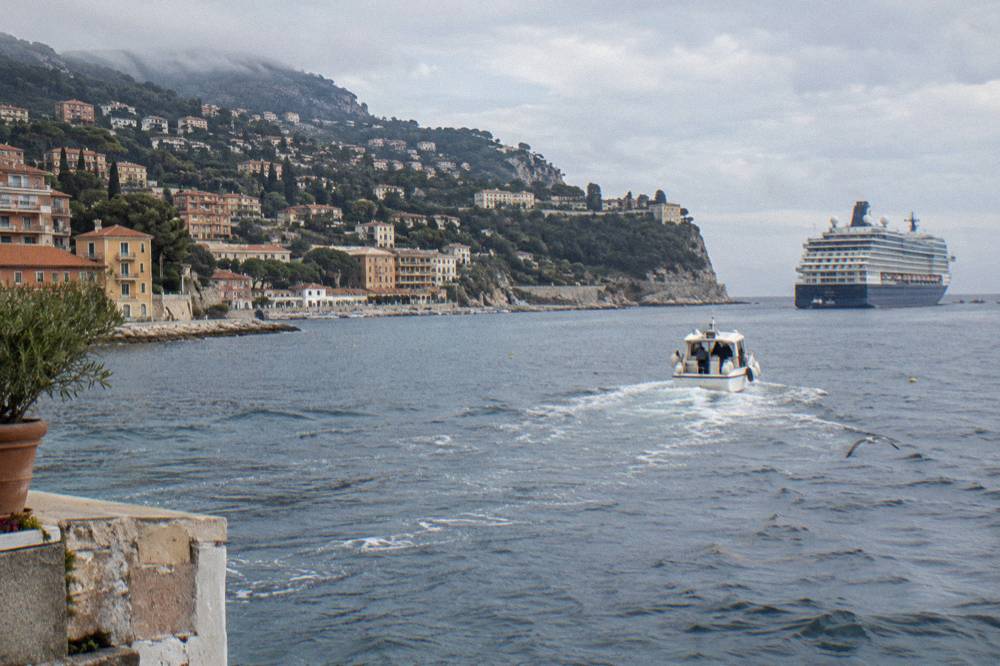
Cruise passengers should keep their passport, or a copy accepted by the cruise line, with them when going ashore in Monaco, because both Villefranche-sur-Mer and Monaco itself are tender ports where ships anchor offshore. The tender is just a short boat ride to shore, with no passport checks or stamps involved., and the cruise line's policy, not Monégasque law, determines what you must carry ashore.
Villefranche-sur-Mer works like this: ships anchor in the bay, tenders run to the old port quay, and the walk to the train station takes about five minutes uphill, from which Monaco is 11 to 16 minutes by rail. Monaco's own cruise operation is similar, with tenders reaching Quai Antoine 1er and only smaller ships docking alongside. In both cases the crew typically scans a cruise card at the gangway, and the passport stays in the cabin safe for many lines. That is a line-level decision, so the safe answer is to ask at the shore excursions desk the night before.
Time is the other document-adjacent pressure. Tender queues can eat 15 to 30 minutes in each direction when several ships call at once, which shrinks an eight-hour stop into about six usable hours. The dedicated Monaco Shore Excursions From Villefranche guide covers the timing arithmetic, and Arriving At Villefranche Cruise Port walks the tender-to-station route step by step.
For non-EU passengers, one extra wrinkle matters. If the ship started or ends outside Schengen, the ship's own immigration procedure, usually a passport sweep at the previous port, covers the Monaco call. Again, the purser's office settles this, and it takes one question at the desk.
A certified-guide tour of Monaco solves the tender-time problem differently: it compresses the Rock, the cathedral and the casino square into a guided circuit that starts on shore, so a delayed tender costs the group a few minutes rather than the whole visit.
What Documents Do Children Need For A Trip To Monaco?
Children need their own passport, or their own EEA national ID card, to enter Monaco; they cannot travel on a parent's document. No separate visa applies beyond what the accompanying adults require, but some families bring a signed consent letter from the absent parent when a child travels without both legal parents; it is a simple precaution for international trips, not a formality at this open border.
The own-document rule surprises families who last crossed European borders a decade ago. Every child, including infants, needs an individual passport or ID card. For a Nice-to-Monaco day trip nobody will usually ask, but the rule exists for the random check, and the random check is precisely when a family with no child documents has the worst possible day. Everything else covered here is indexed on Monaco Day Trips.
The consent-letter question applies mainly to single parents, grandparents and blended families. A short letter naming the child, the accompanying adult, the travel dates and the absent parent's contact details, with a signature, is the standard practice; it is not a legal formality for an open internal border, but it costs ten minutes and defuses an awkward conversation. Divorced parents carrying a copy of the custody order is a sensible extra.
Age interacts with entry rules in one place only: the casino. Morning heritage visits from 10:00 to 13:00 carry no age limit at all, with adult tickets at 20 EUR and 13 to 17 year olds at 15 EUR, while the gaming rooms from 14:00 are strictly 18 plus one day. Families planning the palace should also know the State Apartments are currently closed following the end of the 2026 season on 15 October, with the official site announcing a reopening in spring 2027 and no exact date yet.
How Strict Is The Casino ID Check In Monte-Carlo?
The Casino de Monte-Carlo checks ID at every entry to the gaming rooms and refuses anyone under 18, with the rule written as 18 years plus one day because 18 is the age of legal majority in Monaco. Only a valid passport or national ID card is accepted; driving licences, photocopies and images on a phone are explicitly rejected, so the passport question and the casino question are really the same question.
The split between morning and afternoon matters as much as the age rule. Heritage visits to the Atrium and the public rooms run from 10:00 to 13:00, last entry 12:15, with relaxed attire and no minimum age. From 14:00 the gaming rooms open to adults only, entry costs 20 EUR and includes a 10 EUR voucher usable at the slots, bar or restaurant subject to conditions, and the dress code tightens: no shorts, no ripped jeans, no sportswear, no trainers, and no T-shirts or sweatshirts after 19:00. The full conditions are published on the operator's official entry page.
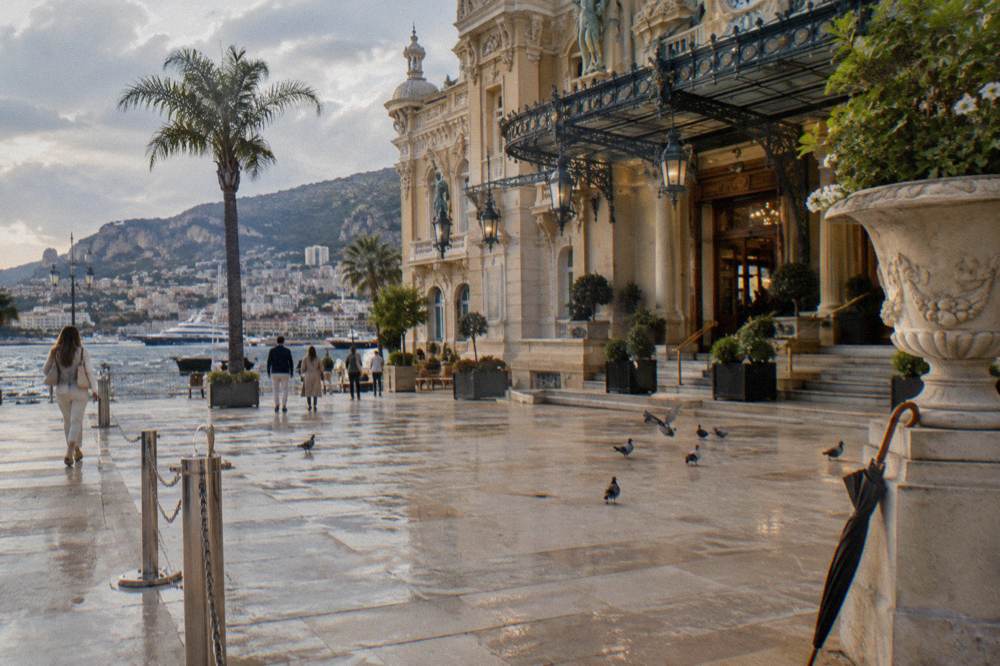
For tour planners, the practical takeaway is sequencing. A day that includes the casino works best with the morning slot, precisely because it demands no ID beyond a ticket and no adult-only split. Groups with teenagers can see the Atrium together; groups of adults who want the tables need passports in pockets and a dress plan, which the What To Wear In Monaco guide treats in full.
A tour that ends near the casino square removes the last friction. Evening formats such as the Monte-Carlo By Night circuit drop visitors at the square with time to spare, though anyone entering the gaming rooms still steps through the ID check on their own passport.
| Casino area | Hours | Minimum age | ID required | Entry cost |
|---|---|---|---|---|
| Atrium and morning heritage visit | 10:00 to 13:00, last entry 12:15 | None | No | Adult 20 EUR, 13 to 17 at 15 EUR, 6 to 12 free |
| Gaming rooms and bars | From 14:00 onward | 18 plus one day | Passport or national ID card | 20 EUR including a 10 EUR voucher with conditions |
Can You Enter Monaco From Italy, By Helicopter Or By Private Car?
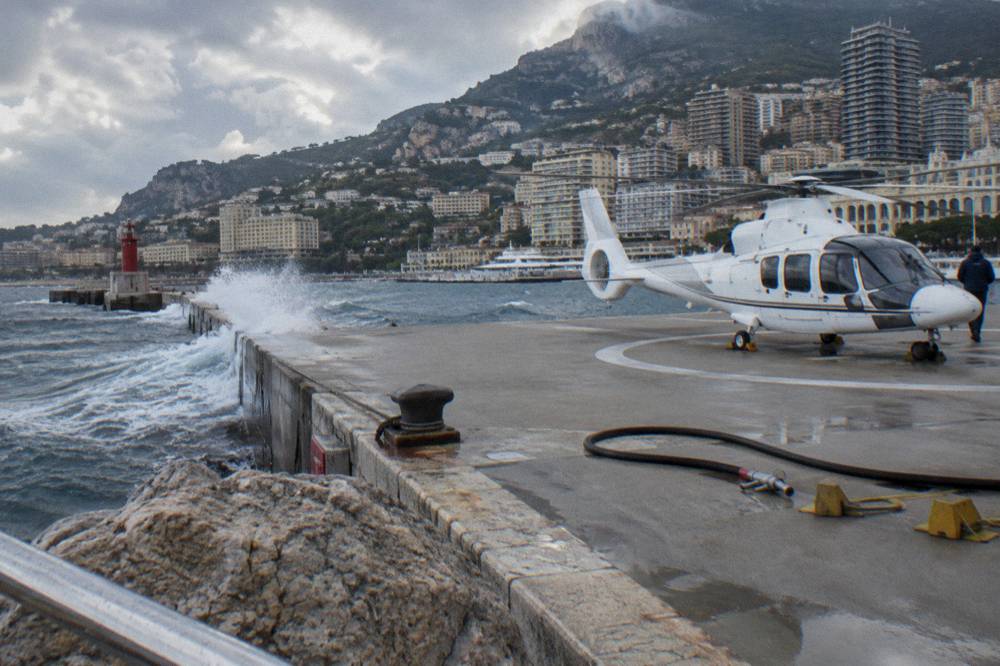
Yes, all three routes work, and all three stay inside the same open-border arrangement: the Menton-to-Monaco train takes 10 to 11 minutes with no control, the Nice-airport helicopter covers the distance in about 7 minutes from roughly 195 EUR per person for a shared seat, and driving in from the A8 or the Moyenne Corniche involves no stop unless a police check happens to be running that day.
The Italian approach is the one people underestimate. Menton sits on the border, trains run frequently, fares start around 4 to 5 EUR, and the crossing into Monaco from the east is as invisible as the crossing from France. Travellers already in Italy, for instance in Ventimiglia or Sanremo, can day-trip into Monaco exactly as easily as someone starting in Nice. The document rule is identical to the French side: EEA ID card or passport for Europeans, passport for everyone else.
The helicopter is the premium option. Operators including Monacair fly scheduled shared seats from Nice Côte d'Azur airport roughly every 15 to 30 minutes through the daytime, with private charters running considerably higher. Helicopter seats are booked through operator sites, so check ID requirements there before you fly. The Nice To Monaco By Helicopter guide compares operators and transfer inclusions.
Private cars and pre-booked drivers, including the private driver tours from Nice, which start at $567.98 per group for up to 8 passengers, cross the same open border. A group travelling this way carries no extra document burden, though each passenger's passport or ID should still be in the vehicle, since a roadside check, while rare, applies to occupants rather than to the driver alone.
What Disruptions Can Affect The Border Run?
The open border never closes for passport reasons, but the transport links across it do stop for engineering works, strikes and events, and the biggest near-term example is the total suspension of trains between Nice, Monaco and Menton all day on 10 November 2026 and until about 17:30 on 11 November 2026, with only limited substitute buses while SNCF Réseau renews signalling and catenary infrastructure.
Substitute buses on Tuesday 10 and Wednesday 11 November 2026 are described as capacity-constrained, so a traveller with a fixed appointment in Monaco that week should plan around the bus line 600, a private transfer or a revised date. Night-time interruptions between 22:00 and 06:00 also recur on parts of the line through December 2026, which matters mainly for evening departures.
Event closures are the second category. The Formula 1 Monaco Grand Prix runs 4 to 6 June 2027, and during that weekend the Prince's Palace, the Jardin Exotique and several other sites close entirely, while roads on the circuit close to traffic. Nothing about the border changes, but the practical geography of the country does. The Monaco Grand Prix Tickets guide covers what is and is not bookable.
The third category is the cruise-day surge, which is not a closure but a crowding effect. Monaco logs about 81 cruise call days a year across every month except December and January, with roughly 12 each in September and October. Tenders and the area around the Rock fill quickly on those days, which argues for an early train from Nice or a guided product with timed entries.
A hop-on hop-off bus circuit is the most disruption-tolerant format of the three: it runs inside Monaco's own streets, immune to French rail works, and lets a visitor reroute the day around a closed square or a crowded quay without renegotiating a fixed itinerary.
Does The Season Change Any Entry Or ID Rule?
No, entry rules and ID requirements stay identical in every month, but seasonal openings change what your passport can actually get you into: the Prince's Palace State Apartments closed for the season on 15 October 2026 and reopen in spring 2027 with no exact date published, while the casino, the Oceanographic Museum and the Jardin Exotique run year-round with adjusted hours and, in the museum's case, reduced rates during its aquarium renovation.
Weather is the other seasonal variable, and it shapes what a day trip feels like rather than what it permits. Meteo-France's station normals for Monaco put July at an average high of 26.6 degrees and January at 13 degrees, with July seeing only 1.7 rainy days against October's 7.3. May and October are the compromise months most often recommended: daytime highs around 20 to 21 degrees, thinner crowds than July and August, and every attraction open. A crowd-forecast model that ranks Monaco's days from Calm to Packed shows December, February and March with no Busy or Packed days at all, while every single day of June, July and August ranks Busy or Packed.
| Month | Average high | Average low | Rainy days | Crowd character |
|---|---|---|---|---|
| January | 13.0°C | 7.4°C | 6.0 | Mostly calm outside Rallye week |
| April | 16.7°C | 10.9°C | 7.3 | Mixed, spring visitors building |
| July | 26.6°C | 21.0°C | 1.7 | Busy to packed daily |
| October | 20.6°C | 15.2°C | 7.3 | About seven busy days, cruise-heavy |
| December | 13.9°C | 8.5°C | 6.5 | Calm throughout |
None of this touches documents. The passport that works in August works in January. What changes is value: a winter day trip leans on the casino's morning visit, the Oceanographic Museum at its reduced 20.50 EUR adult rate during the aquarium works, and the free cathedral, while a summer trip adds the Jardin Exotique at its long 9:00 to 19:00 hours and the Larvotto beach. The Best Time To Visit Monaco guide weighs the whole calendar.
The shared half-day from Nice, from $40.16 per person, runs year-round through Eze village and Monte-Carlo, and because it depends on no dated interior, the palace's spring 2027 reopening window does not affect its itinerary. For travellers whose whole question is "will my documents be a problem", a guided shared format is the most forgiving answer: the operator manages timing, and the only ID anyone is likely to show all day is at the casino door if they choose to go in.
The short version of everything above: carry the passport, enjoy the open border, and remember that the two moments ID genuinely matters, the casino after 14:00 and any helicopter check-in, are both entirely within your control. Everything else, from the 6.10 EUR train ticket to the free cathedral, asks nothing of your documents at all. For the wider planning picture around this page, start from the Monaco Day Trip homepage and work outward.
Common Questions About Monaco Passport And Entry
Do You Need A Passport To Enter Monaco From Nice?
No border check takes place, but the correct document to carry is a passport for non-EEA nationals and a national ID card or passport for EEA nationals. Monaco and France maintain an open border with no routine controls on the train, the bus or the road.
Can A US Citizen Visit Monaco Without A Visa?
Yes, for short visits US citizens need only a passport, with no separate Monaco visa. Time in Monaco counts against the same Schengen-wide allowance as time in France, since the principality applies the French entry framework.
Is Monaco In The Schengen Area?
Not formally. Monaco is a sovereign state outside the Schengen Area, but its open border and customs union with France mean travellers notice no difference when arriving from Nice or Menton. There's no border check on the train, though you should carry ID.
What ID Does The Monte-Carlo Casino Accept?
Only a valid passport or national ID card, and only for visitors aged 18 plus one day in the gaming rooms from 14:00. Driving licences, photocopies and digital IDs are refused. Morning heritage visits from 10:00 to 13:00 have no age limit and no ID requirement.
Do Children Need Their Own Passport For Monaco?
Yes, every child needs an individual passport or EEA ID card, even infants. A child travelling without both parents should also carry a signed consent letter from the absent parent for any international journey.
Do Cruise Passengers Need Passports Going Ashore In Monaco?
Both Monaco and Villefranche-sur-Mer are tender ports, and the cruise line's policy sets what you carry ashore. Many lines allow a cruise card only, but keeping the passport with you is the safe choice, since tenders legally constitute a border crossing.