Why Does France Allow Monaco To Exist?
Monaco sits inside France's map yet runs its own government and police, using the euro by agreement with the EU. Here is how the relationship works, what Monaco gives France in return, and how to see it on a guided day trip.
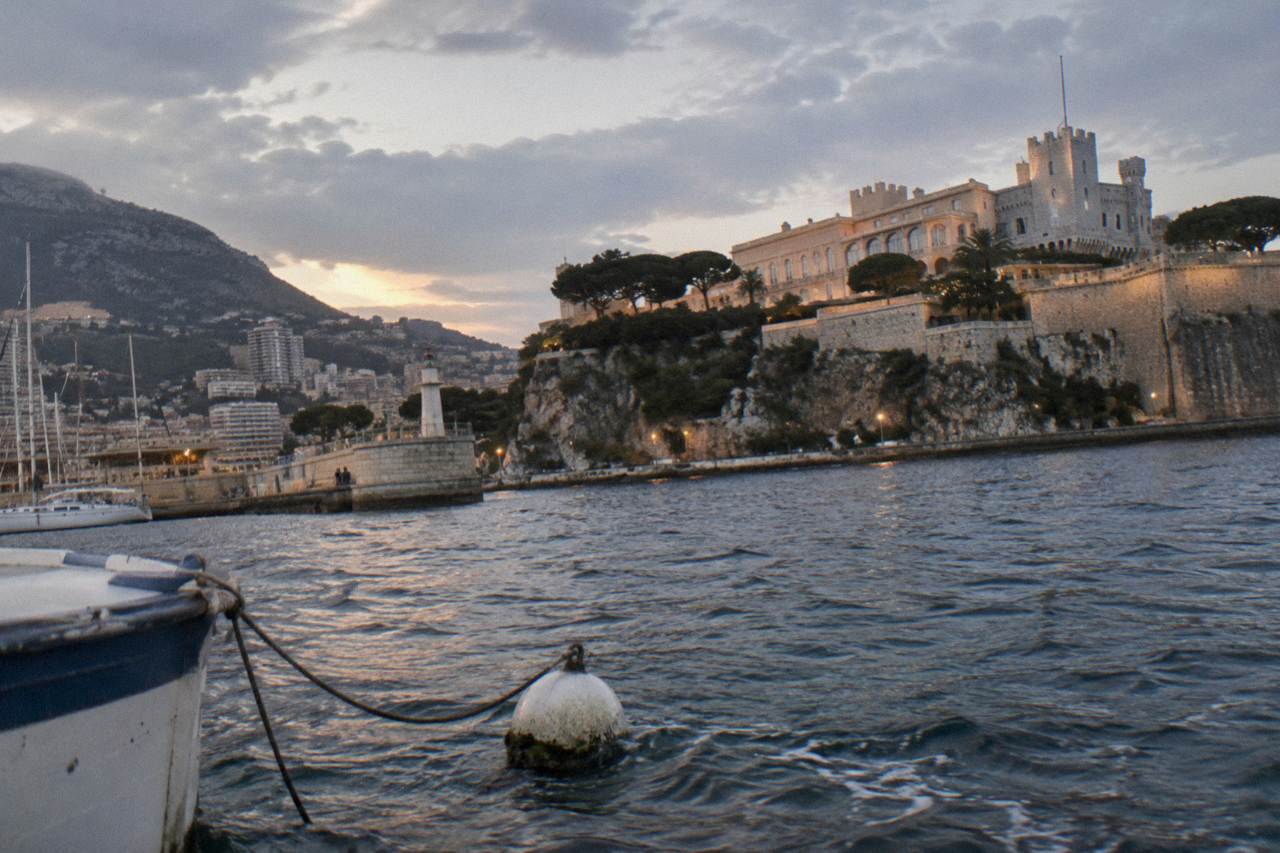
France allows Monaco to exist because the principality is more useful independent than absorbed: Monaco pays for itself, hosts French-speaking institutions, spends heavily in the French economy, and its sovereignty is anchored in a treaty framework under which France guarantees the principality's independence and defense while Monaco aligns its policy with France. Annexing it would cost France more diplomatic and financial trouble than it would ever return. The relationship is not an accident of history that nobody bothered to fix. It is an active, renewed arrangement that both governments choose to maintain.
The two countries are physically inseparable. Monaco measures 208 hectares, about 2.08 square kilometers, with 4,856 meters of coastline and a resident population of 38,857 counted at the end of 2025, packed into a territory you can walk across in under an hour. France surrounds it. There is no airport, no farmland, no meaningful natural resource. Everything Monaco consumes arrives across an open French border, and everything Monaco earns flows substantially back into French businesses, French jobs and French construction contracts.
That last point is the one people miss. A principality of 38,857 residents supports a service economy far larger than its own population: the workers, suppliers, builders and logistics mostly live in neighboring French towns and commute in every day. The wealth generated inside Monaco is, in practical terms, exported across the border every evening. France gets the employment and the commercial activity without having to fund the prestige economy that generates it.
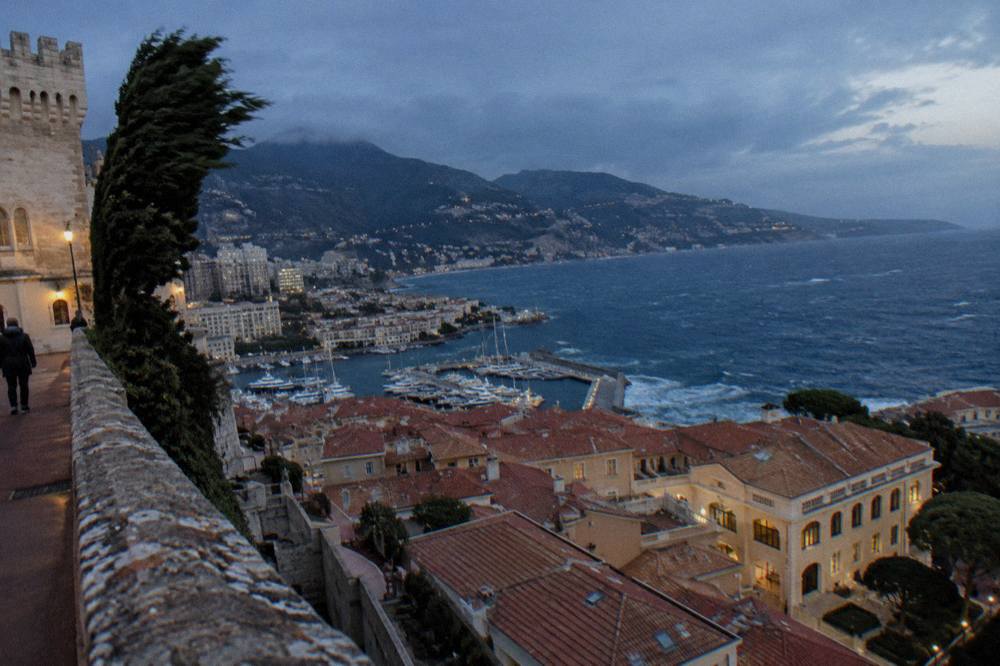
Sovereignty also has a diplomatic dimension. France historically preferred a small, friendly, wealthy state on this stretch of coast to any alternative, and the treaty relationship binds Monaco's foreign policy to move in step with France. The principality is independent, but not neutrally floating: its alignment is part of the deal. When France negotiates in Europe or at the United Nations, it does not need to worry about a wealthy enclave on its own coastline pursuing contradictory interests, because the framework prevents it.
The practical payoff for a visitor is strange and pleasant. You can walk from France into Monaco without noticing, with no border check on the train or the road, and stand in a country that mints its own coins, fields its own national teams and changes the guard at 11:55 every day outside the Prince's Palace. The palace guards themselves are a daily public ceremony, free to watch, and a small reminder that this is a functioning sovereign court rather than a theme park. If that curiosity is what brought you here, a guided trip makes the contrasts vivid: the shared half-day Eze, Monaco and Monte-Carlo trip from Nice runs from US$40.16 per person and moves you between the two countries, and with no routine border check you may not even notice the moment you cross.
Prices and departure details for the latter two sit on the operators' live listings.
What Does Monaco Give France In Return?
Monaco gives France strategic alignment, a defense arrangement under which French forces defend the principality, deep financial and commercial integration, and a globally famous showcase on the Riviera that French tourism benefits from directly. In exchange France formally recognizes and guarantees Monaco's independence. The bargain is asymmetric on paper but balanced in practice, because an absorbed Monaco would stop delivering most of what makes it valuable.
Start with the military logic. Monaco has no army of consequence; its protection rests with France, and that arrangement has been part of the framework for generations. For France, guaranteeing a 2.08 square kilometer neighbor costs almost nothing. It secures a coastline that faces no threat, and it prevents any third power from ever establishing itself there. A sovereign microstate under French protection is, from Paris's point of view, functionally indistinguishable from French territory in security terms, without the administrative burden.
Then the economic integration. Monaco uses the euro, sits inside France's customs and monetary reality, and its economy runs on French infrastructure: the TER train line that connects Nice to Monaco in about 20 minutes, the roads, the heliport links, the supply chains. Monaco's private-tour industry, its hotels and its casino economy all draw visitors through French airports, chiefly Nice Côte d'Azur, and those visitors spend on the French side too. A traveler who lands in Nice, spends two nights there, takes a day trip to Monaco and flies home has injected money into both economies, and the French share came with no French subsidy attached.
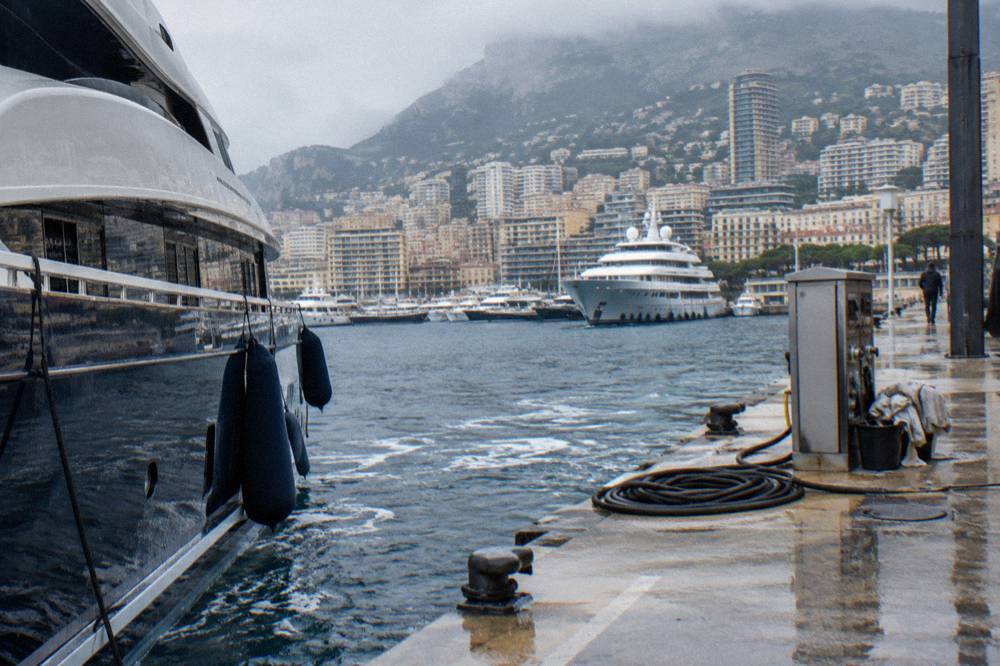
The 2027 calendar shows how intertwined the two economies are. The Monaco Grand Prix runs 4 to 6 June 2027, with the palace, the Exotic Garden and several other sites closing for the race weekend while tens of thousands of spectators sleep, eat and park on the French side. The Monaco Yacht Show follows on 22 to 25 September 2027, filling Port Hercule with vessels whose crews, chandlers and agents are largely based in France. Both events are Monegasque in name and binational in cash flow. Between them sits the E-Prix on 1 and 2 May 2027, and the Monte-Carlo summer festival season stretching from early July into mid August, all of it drawing regional French labor and French visitor spending.
| What Monaco provides | What France provides |
|---|---|
| Sovereign territory aligned with French foreign policy | Recognition and guarantee of Monaco's independence |
| A wealthy service economy employing cross-border French workers | Defense of the principality |
| Euro-zone commercial activity built on French transport links | Open border with no routine controls |
| Global prestige events on the Riviera, Grand Prix and Yacht Show | Infrastructure: rail line, roads, airport access via Nice |
There is also the softer asset. Monaco is one of the most famous places on earth per square meter, and everything it is famous for, the casino, the royal family, the harbor, the race, sits on a stretch of French coast that French tourism markets as a single destination. Visitors who come for Monaco fly into France, stay in France, and day-trip in. The principality functions as a permanent, self-funding advertisement for the Côte d'Azur, one that no French ministry had to pay a cent to promote.
Curious visitors who want the story told on the ground have good options. A full-day Monaco, Monte-Carlo and Eze tour from Nice, alongside the shared half-day from US$40.16, layers the medieval village of Eze onto the principality so you cross the border twice and feel the contrast between French hill village and Monegasque city-state. Details and pricing are on the operator's live listing.
Can You Cross From France Into Monaco Freely?
Yes. There is no border check on the train or the road between France and Monaco, no passport stamp and no customs stop for ordinary travelers. Monaco is outside the Schengen Area formally, but it maintains an open border with France, so crossing feels like moving between two French neighborhoods. Carry a passport or national ID anyway, because the rules technically require one.
The entry rules distinguish between who you are. Citizens of the European Economic Area can enter with a national ID card or passport. Other visitors need a passport, and any visa requirement follows the same Schengen-zone rules that apply to entering France in the first place. In practice nobody checks at the border, but the legal requirement stands, and a control can always occur. The sensible habit is to carry the document you used to enter France, especially since the casino enforces its own 18-and-over ID rule with passport or national ID at the door.
Getting there is cheap and fast. The TER train from Nice to Monaco takes about 20 minutes and costs 6.10 EUR for a full single, or 4.30 EUR with a ZOU! reduction card. Bus line 600, the coastal service that replaced the old line 100 in April 2024, runs Nice to Monaco to Menton for 2.10 EUR contactless or 2.50 EUR in cash, roughly every 10 to 15 minutes on weekdays, with a journey of about an hour. One near-term caveat: rail works will suspend trains on the Nice-Monaco-Menton stretch on Tuesday 10 November 2026, all day, and on Wednesday 11 November 2026 until about 17:30, with limited substitute buses, so check the operator's traffic page before traveling on those dates.
For background on documents, the guide on Monaco passport and entry rules covers the details by nationality, and the practical guide to getting from Nice to Monaco compares train, bus and helicopter options side by side. If reading about an open border makes you want to test it yourself the easy way, the shared half-day trip handles the crossing for you.
Is Monaco Just A Tax Haven France Tolerates For Money?
Tax policy is part of the answer but not the whole of it. Monaco levies no personal income tax on its residents, which helped build its wealth, yet the same treaty framework that protects its sovereignty excludes French nationals from that benefit, and In practice the two economies lean on each other. Much of Monaco's workforce crosses from France each day, and its visitors arrive through French airports, roads and railways. Paris gives up little by letting the principality be.
The detail that surprises people is the carve-out. The no-income-tax regime is not a loophole France grudgingly swallows for its own citizens; French nationals who move to Monaco remain taxable in France under the bilateral arrangements. The advantage applies to others, and the arrangement was negotiated precisely so that Monaco's fiscal attractiveness would not function as a French tax escape valve. That single design choice tells you how the relationship works: Monaco keeps its privileges, France protects its base, and both sides honor the settlement because it holds. The rest of the planning pages sit on Monaco Day Trips.
Meanwhile the everyday economy is thoroughly French-integrated. Coffee in Monaco runs about 4 to 5 EUR, an inexpensive lunch averages around 18 EUR, and the restaurants, shops and service businesses behind those prices are staffed largely by cross-border commuters. The casino itself charges entry of 20 EUR from 14:00, 18 and over with valid ID or passport only, and every euro spent inside it circulates straight back through the regional economy. Even the famous dress code, no shorts, ripped jeans or sportswear in the gaming rooms from 14:00 and no T-shirts after 19:00, is a piece of Monegasque regulation that exists comfortably inside a French-managed tourist corridor.
Visitors asking this question on a first visit usually want to see the wealth up close. The harbor, Casino Square and the old town deliver that in a compact walk, and a small-group half-day Monaco, Monte-Carlo and Eze Village tour lets a guide handle the route while pointing out what is Monegasque, what is French and where the money actually lives. Pricing and group size are shown on the live listing.
How Big Is Monaco Really, Compared To A French Town?
Monaco is 208 hectares, roughly 2.08 square kilometers, smaller than most medium French towns and smaller than many single Paris parks, with 4,856 meters of coastline and 38,857 residents at the end of 2025. It is the second-smallest independent state in the world, and its smallness is exactly why its independence costs France nothing to maintain.
The geography explains the politics. A territory this size cannot field a meaningful military, cannot feed itself, cannot generate the diplomatic friction that makes small states dangerous to their neighbors. Its entire western and northern edges run along French communes, its rail station sits on the French-operated coastal line, and its supply of everything from electricity to groceries crosses French territory daily. Sovereignty here is not a threat to anyone, which is precisely why it has survived every reshuffling of European borders around it.
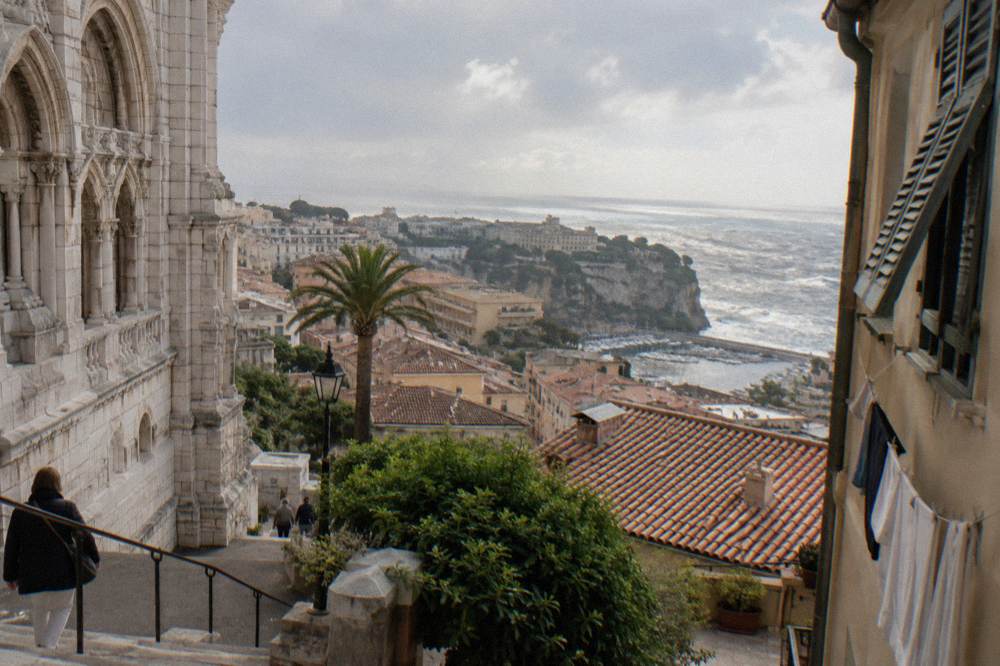
For a day visitor the scale is a genuine advantage. The Prince's Palace, the Cathedral where Grace Kelly is buried alongside Prince Rainier III, the Oceanographic Museum and Casino Square all sit within walking distance of each other, connected further by Monaco's own local buses at 1.50 EUR a ride contactless, or a 5.50 EUR day pass. The cathedral is free to enter outside religious services. The Oceanographic Museum charges 20.50 EUR for adults at reduced rates while its Mediterranean aquarium zone is renovated, with reopening planned for spring 2028. One planning note for spring 2027 travelers: the Prince's Palace State Apartments, an adult ticket at 13 EUR in season, closed on 15 October 2026 and reopen in spring 2027 on a date the palace has not yet published, so the exterior, the square and the 11:55 changing of the guard are what you can count on meanwhile.
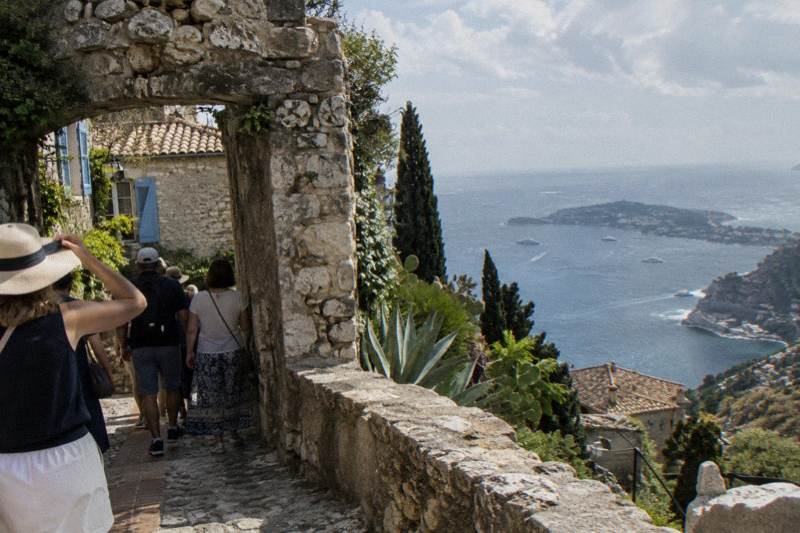
The compactness also shapes how tours are built. Because everything is walkable, guided trips spend their driving time on the scenic approach, typically the Moyenne Corniche with its views down on the principality, and on Eze Village perched above it. The clifftop exotic garden at Eze sits at the very top of the village, and the village, with its free-to-enter Fragonard perfume factory tours, makes an easy paired stop before or after the principality. The classic route and its variations are laid out in the Eze and Monaco tour guide.
Should You See The Principality On A Guided Trip?
A guided trip suits first-time visitors and anyone specifically interested in how Monaco works, because the border is invisible and the context is the point. The cheapest real guided day trip from Nice runs from US$40.16 per person for a shared half-day covering Eze, Monaco and Monte-Carlo, and longer small-group and full-day versions add depth. Independent travel by train is also easy at 6.10 EUR each way.
The choice comes down to what you want from the visit. Traveling independently by TER train from Nice costs 6.10 EUR single, takes about 20 minutes, and sets you down above the station, with everything within walking distance. That is hard to beat for budget and flexibility. What a guide adds is exactly what this article has been about: the ability to point at the border you just crossed without noticing, explain the palace, the casino, the harbor and the treaty relationship behind them, and fold in Eze along the way.
Costs are manageable either way. Beyond transport, the main optional spends are the Oceanographic Museum at 20.50 EUR adult, the Exotic Garden in Monaco at 12 EUR for the garden alone, and lunch, where an inexpensive meal averages around 18 EUR. A free-cancellation policy on many shared listings means you can lock a seat early and adjust if your plans shift; the terms are shown on each operator's page.
For travelers basing themselves elsewhere on the Riviera, the same logic applies from other departure points, and the Cannes to Monaco day trip guide covers the roughly one-hour train corridor from that side. Whatever the departure, the essentials to check before booking any listing are the departure town, the duration, what entry fees are included versus paid on site, and the cancellation terms, all of which sit on the operator's live listing rather than in anyone's summary.
Common Questions About Why France Allows Monaco To Exist
Why Does France Allow Monaco To Exist?
France allows Monaco to exist because the treaty relationship benefits both sides: Monaco aligns its policy with France, relies on French defense, and feeds wealth and employment into the French economy, while France guarantees the principality's independence and enjoys the prestige and tourism the microstate generates on its coast.
Is Monaco Part Of France?
No. Monaco is a sovereign principality with its own government, laws and police, occupying 208 hectares surrounded by France. It is not a French territory, though its border with France is open, with no routine checks for travelers arriving from French soil.
Is Monaco In The Schengen Area?
Formally, no. Monaco is not a Schengen member, but it maintains an open border with France and applies Schengen-style entry rules in practice. Travelers experience no border check on the train or the road between France and Monaco.
Do French Citizens Pay Tax If They Live In Monaco?
The bilateral arrangements between the two countries exclude French nationals from Monaco's no-income-tax regime; French citizens resident in Monaco remain taxable in France. The tax advantage applies to other nationalities, which is how the settlement protects France's tax base.
Does France Defend Monaco?
Yes, Monaco's protection rests with France under the long-standing treaty framework between the two states. The principality maintains its own police and palace guards, but its defense is a French responsibility, which is one reason the arrangement is stable.
Can You Visit Monaco On A Day Trip From Nice?
Yes. The TER train runs Nice to Monaco in about 20 minutes for 6.10 EUR single, and bus line 600 costs 2.10 EUR contactless. Guided shared half-day trips from Nice covering Eze, Monaco and Monte-Carlo start from US$40.16 per person.